HIPAA-compliant redaction software built for the scale and complexity of healthcare records.
With Redactable you get 98% time-savings compared to
Adobe and the rest.





The Top Challenges the Healthcare Industry Faces

Regulatory Risk

.svg)
.svg)

Why Redactable is the Best Choice for the Healthcare Industry
HIPAA-Ready PHI Detection
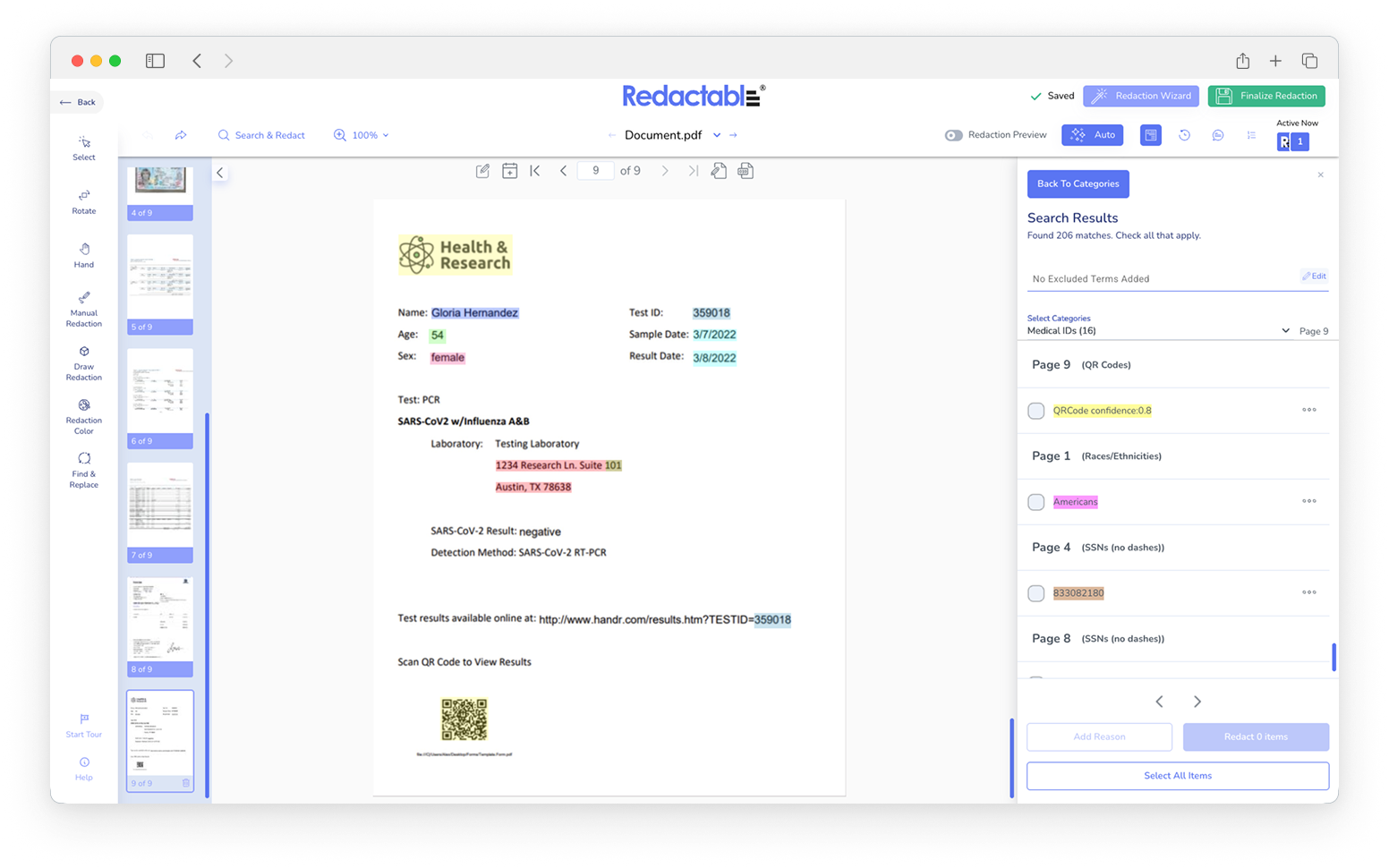
Stop worrying about what got missed. Redactable's AI automatically identifies and permanently removes all 18 HIPAA-defined patient identifiers, including names, MRNs, SSNs, dates, biometrics, and more, across every document format, including scanned files and handwritten notes.
Redactable uses a multi-layer verification system that combines automated detection with optional human review, so nothing gets missed and nothing gets over-redacted.
Permanent, Irreversible Redaction
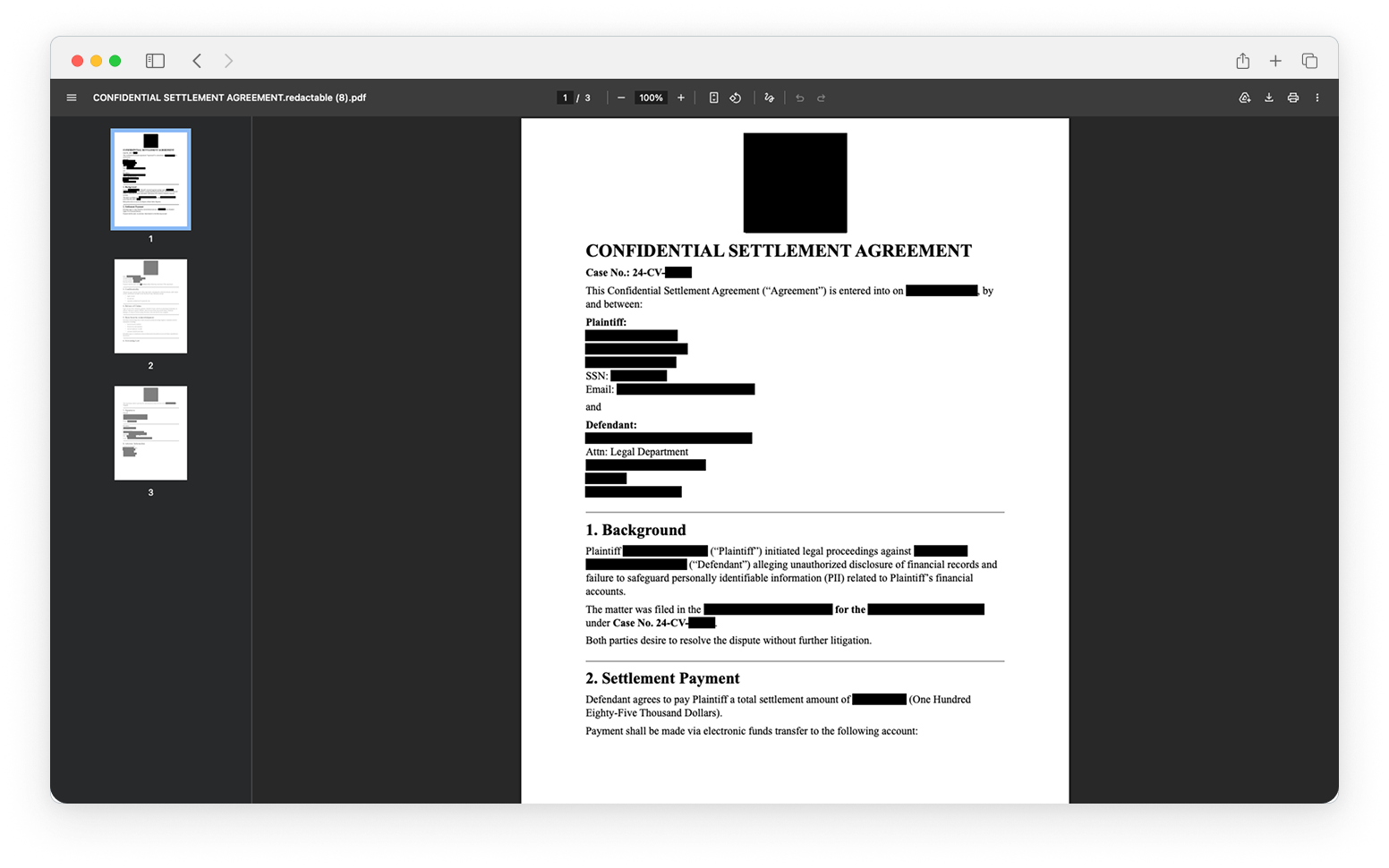
Visual masking isn't enough. Redactable goes beyond black boxes to permanently delete sensitive text, metadata, hidden layers, and embedded images, so patient data can never be recovered or exposed in a breach.
Automated Audit Trails & Redaction Certificates
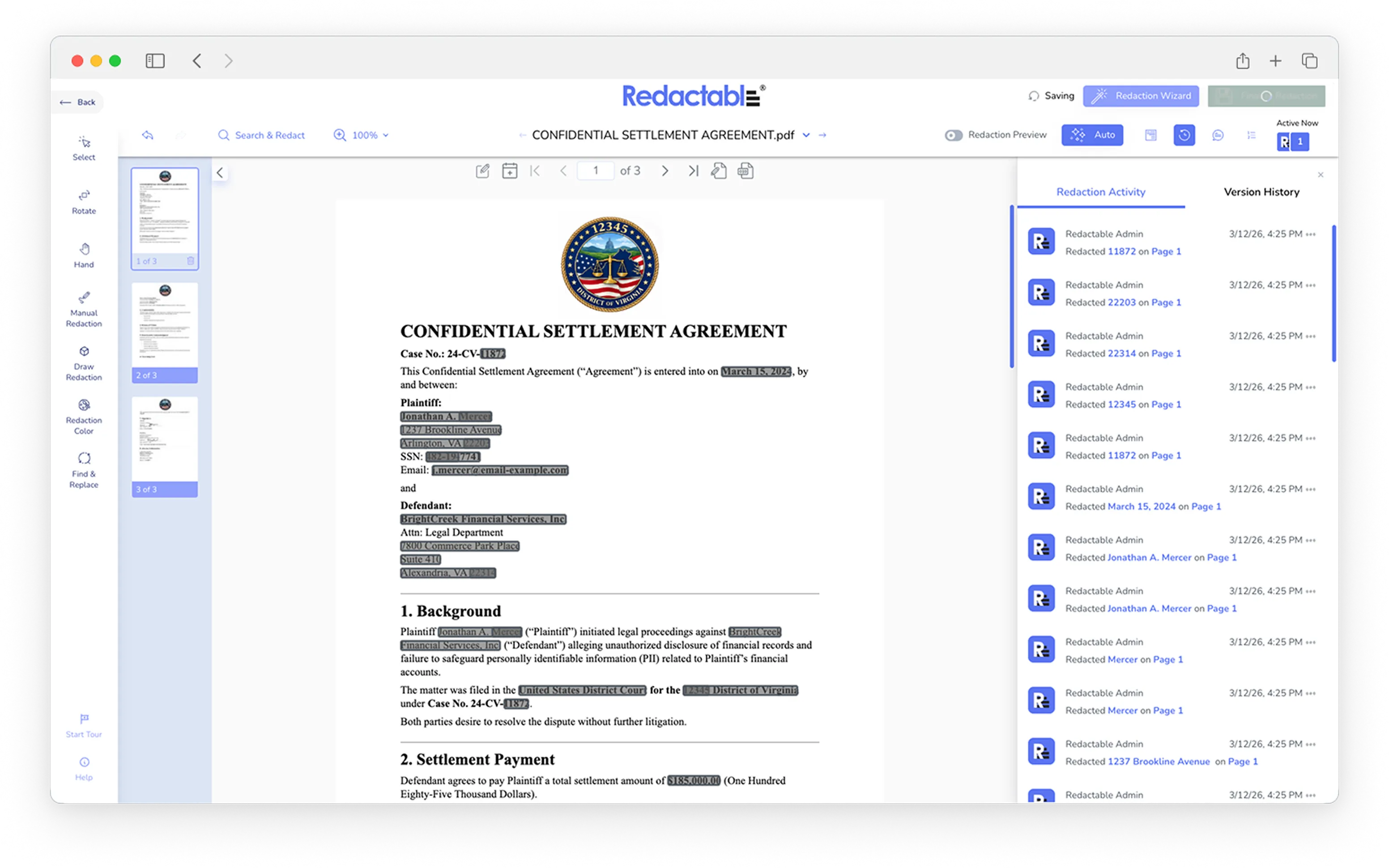
Regulators need proof that PHI has been removed. Redactable automatically logs every redaction with user identity, timestamp, location, and reason code, then generates inspection-ready certificates so you can demonstrate compliance instantly.

High-Volume Processing at Healthcare Scale
With thousands of EHRs, billing records, and clinical documents to manage, manual review isn't an option. Redactable processes large volumes of records in minutes. What would take your staff hours or days is done before the next patient walks in.
Seamless EHR Integration & Team Collaboration
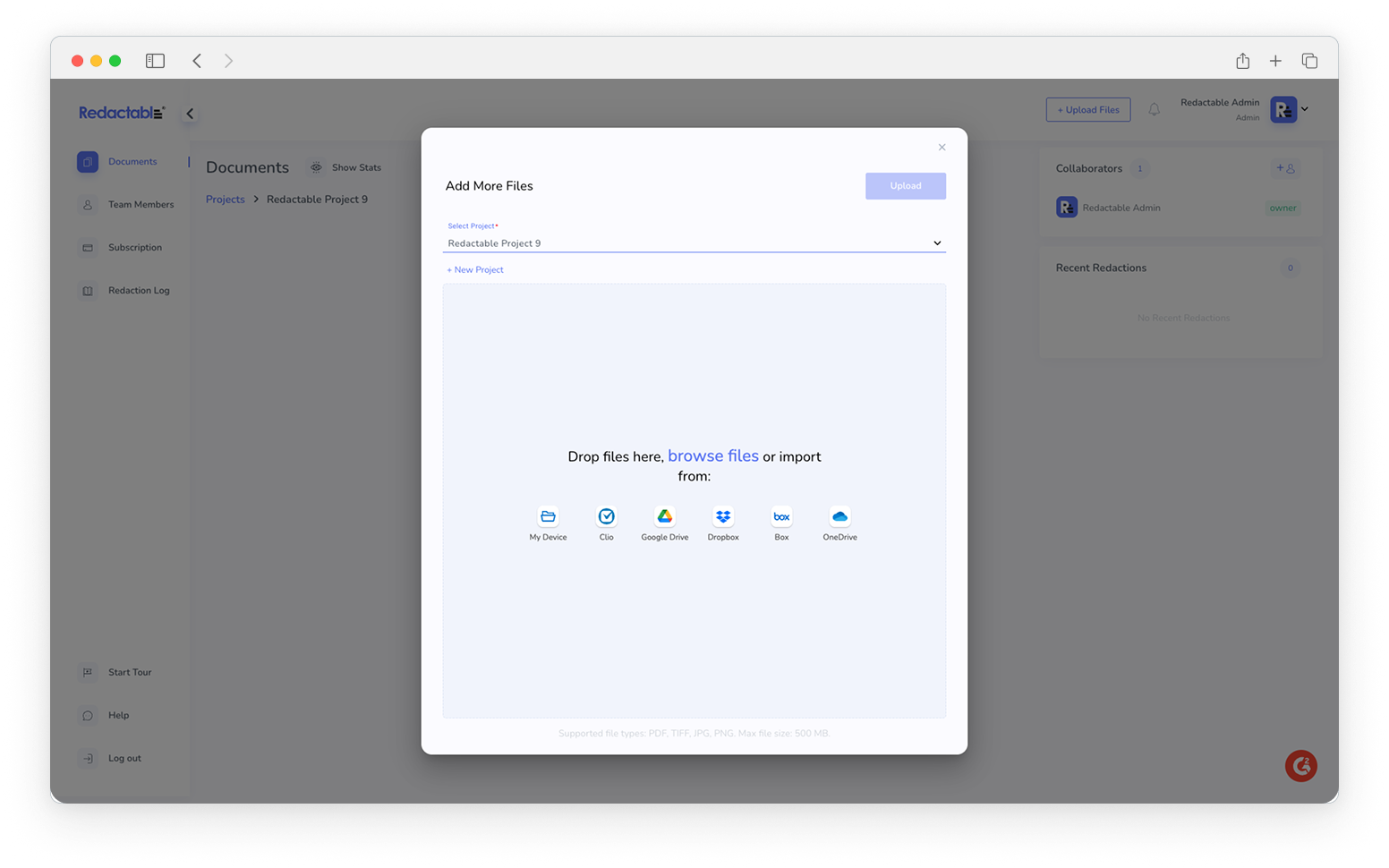
No disruption to your existing workflows. Redactable integrates directly with the platforms your teams already use, Google Drive, OneDrive, SharePoint, Dropbox, and Box, with role-based permissions and collaborative review tools that keep everyone accountable and on the same page.
OCR for Every Document Type Healthcare Produces
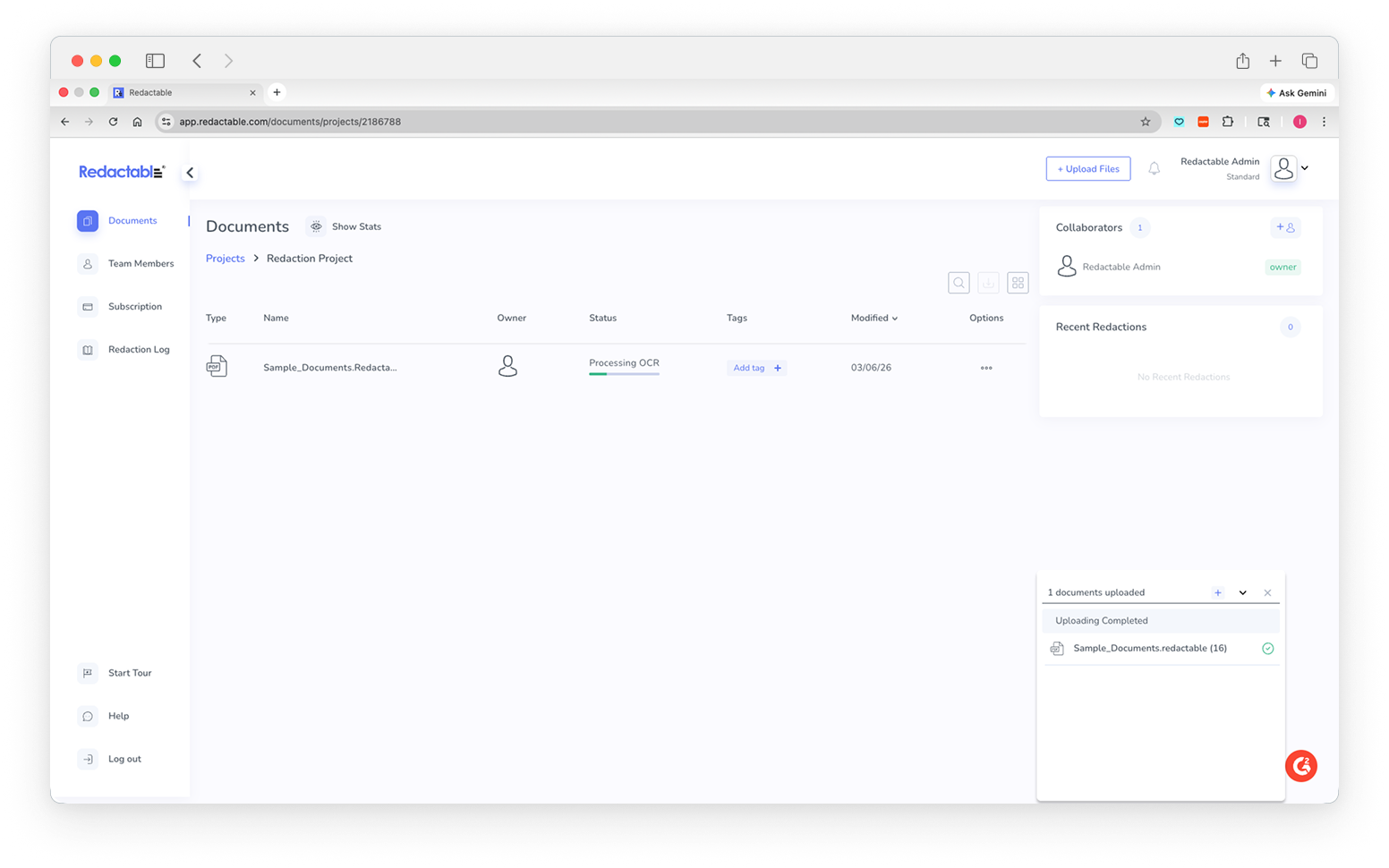
Healthcare doesn't run on clean digital files. Scanned charts, faxed referrals, handwritten clinical notes, and image-based lab reports all carry PHI that standard tools miss entirely.
Redactable's AI-powered OCR converts them into fully searchable documents so every identifier can be found and permanently removed, no matter the format it arrived in.
How it Works


Six ways to redact sensitive healthcare documents
Outcomes for Healthcare Professionals Using Redactable
.svg)


See What Our Clients Have to Say
Security & Compliance Info
Book a Demo Today!
organizations specific needs. Receive a custom, free quote after the call.
Frequently asked questions
Healthcare redaction is the process of permanently removing protected health information (PHI) and personally identifiable information (PII) from medical documents before they are shared, disclosed, or archived. For healthcare providers, proper redaction is both a legal requirement and an ethical obligation, ensuring compliance with HIPAA, GDPR, and other regulatory requirements while safeguarding patient privacy and maintaining trust. Without it, healthcare organizations risk unauthorized access to confidential patient and other sensitive information, as well as serious regulatory penalties. As more medical records move to electronic health records systems and are exchanged digitally at scale, the stakes have never been higher.
Healthcare professionals are responsible for identifying and redacting a broad range of sensitive patient information before any document is shared or disclosed. Under the HIPAA Privacy Rule, covered entities must protect 18 specific patient identifiers, including patient names, medical record numbers, Social Security numbers, contact details, dates of birth, insurance details, health plan beneficiary numbers, and biometric identifiers such as fingerprints and facial images. Beyond these direct identifiers, healthcare organizations must also redact medical history details, insurance claims data, financial account information, and any other data points that could be used to re-identify a patient. When combined with clinical information, even seemingly minor details qualify as protected health information (PHI) and must be handled accordingly.
Incomplete or inconsistent PHI redaction creates vulnerabilities that extend well beyond simple compliance violations. Healthcare data breaches, stemming from hacking, insider threats, lost devices, or human error, can expose sensitive patient information to bad actors who use it to commit medical identity theft, obtain fraudulent prescriptions, or file false insurance claims. The consequences for healthcare organizations are severe: fines under HIPAA regulations can reach hundreds of thousands of dollars per violation, and reputational damage can erode patient trust that takes years to rebuild. Manual redaction processes compound these risks by introducing inconsistency, fatigue-driven oversights, and the false security of visual masking tools that leave recoverable data hidden in metadata and document layers.
Manual redaction is slow, error-prone, and unsustainable for healthcare organizations managing large volumes of medical documents. Traditional methods like blacking out text with markers or using basic PDF editors do not actually remove sensitive patient information; they simply cover it with graphic elements that can be stripped away, leaving PHI exposed. Redactable eliminates these risks with automated redaction that permanently deletes sensitive data, including hidden metadata, transparent layers, and embedded images, making it completely unrecoverable. Healthcare professionals save up to 98% of the time typically spent on manual review, while built-in audit trails and redaction certificates provide the compliance documentation needed to satisfy HIPAA requirements, regulatory audits, and business associate obligations. Advanced OCR technology ensures that even scanned charts and faxed referrals are fully covered.
Redactable is purpose-built to support HIPAA compliance at every stage of the redaction process. The platform automatically detects and permanently removes all 18 HIPAA-defined PHI identifiers across medical records, insurance claims, clinical trial documents, and revenue cycle management files. Every redaction action is automatically logged with user identity, timestamp, page location, and reason code, creating an inspection-ready audit trail that satisfies regulators without any additional manual effort. Redactable also supports Business Associate Agreements (BAAs), making it a fully HIPAA-compliant vendor for healthcare providers, healthcare clearinghouses, and their business associates. With SOC 2 Type II certification and FIPS 140-2 validated encryption, your organization's most sensitive data is protected from intake to final disclosure.
Yes. Redactable is built to handle the document volumes that healthcare organizations actually face. Whether your team is processing thousands of electronic health records, preparing clinical trials data for regulatory submission, responding to RCM audit requests, or managing medical record releases under HIPAA's 30-day response requirement, Redactable lets you upload up to 100 documents at once, each containing up to 5,000 pages. . Once uploaded, automatic redaction rules and custom redaction templates can be configured once and applied consistently across every document, ensuring standardized, defensible redaction at scale.
Yes. Redactable offers a free trial so your team can experience the platform firsthand before making any commitment. No credit card is required to get started.

Over 98% time savings with AI-powered redaction

