FOIA Redaction
USPS FOIA Requests
USPS FOIA Requests
Automated FOIA redaction software for USPS records
Securely protect sensitive information and ensure compliance with federal FOIA regulations using Redactable’s AI-powered redaction software.
The Freedom of Information Act (FOIA) grants the public the right to request records from federal agencies, including the United States Postal Service (USPS). USPS manages millions of records covering mail services, operational data, financial information, and internal policies. While transparency is essential, USPS must also safeguard sensitive data, such as personal identifiers, security details, and proprietary business information.
Redactable’s automated FOIA redaction platform helps USPS process requests more efficiently, maintain compliance, and protect sensitive content from accidental disclosure. With AI-powered detection and permanent redaction, USPS can confidently release records while preserving public trust.
IMAGE IDEA: [Postal worker reviewing mail records](alt-text: USPS employee reviewing FOIA request documents)
How USPS FOIA requests work: process, timelines, and limitations
Submitting a FOIA request to USPS begins with a written application. Citizens can submit requests through the USPS FOIA Portal, by mail, fax, or email. A valid request should include a clear description of the records being sought, such as specific timeframes, subject matter, or office divisions.
Once received, USPS reviews the request to:
- verify that the records exist
- determine whether exemptions apply
- estimate processing fees
- decide how much information can be disclosed
Under FOIA, USPS must respond within 20 business days. However, extensions may be necessary for:
- large or complex requests
- requests requiring consultation across multiple offices
- high volumes of responsive records
Fees may apply for search, review, and duplication depending on the requester’s category (commercial, educational, news media, or personal). Fee waivers are available if disclosure significantly benefits the public.
Even when requests are approved, documents often contain sensitive data. Redaction ensures private or security-related information is permanently removed before release, balancing transparency with confidentiality
Common FOIA exemptions for USPS records
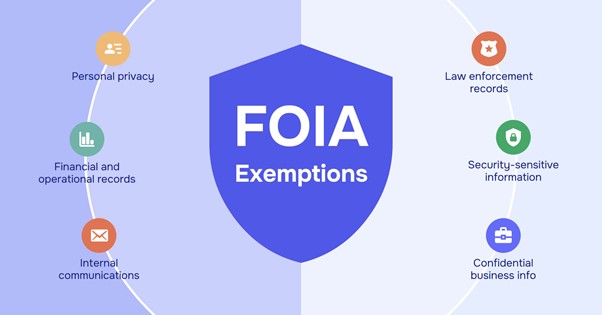
Like other federal agencies, USPS may withhold certain categories of records under FOIA’s nine exemptions. Common USPS-related exemptions include:
Personal privacy: Names, addresses, phone numbers, Social Security numbers, medical records, and other PII.
Law enforcement records: Inspection Service investigations, internal case files, or information that could interfere with enforcement actions.
Internal agency communications: Draft policies, internal memos, or pre-decisional documents not intended for public release.
Confidential business information: Contracts, trade secrets, pricing data, and proprietary information submitted by USPS vendors.
Security-sensitive information: Operational details about postal facilities, infrastructure security, or emergency response plans.
Financial and operational records: Banking information, rate-setting deliberations, or data that could compromise USPS’s competitive position.
Agencies are required to redact these exempt categories before records are released. Redactable automates the process, ensuring consistent, permanent, and error-free redaction.
Permanent redaction vs visual hiding
Traditional methods such as black rectangles added in PDF editor apps can leave sensitive content recoverable. Metadata, copy-paste vulnerabilities, or layered objects may still expose hidden data.
Redactable ensures true permanent redaction by removing:
- text, numbers, and identifiers
- metadata and hidden layers
- transparent or covered objects
- embedded images, charts, and signatures
With Redactable, USPS can guarantee that redacted information is fully unrecoverable and compliant with FOIA requirements.
Automated FOIA redaction software for USPS records
Securely protect sensitive information and ensure compliance with federal FOIA regulations using Redactable’s AI-powered redaction software.
The Freedom of Information Act (FOIA) grants the public the right to request records from federal agencies, including the United States Postal Service (USPS). USPS manages millions of records covering mail services, operational data, financial information, and internal policies. While transparency is essential, USPS must also safeguard sensitive data, such as personal identifiers, security details, and proprietary business information.
Redactable’s automated FOIA redaction platform helps USPS process requests more efficiently, maintain compliance, and protect sensitive content from accidental disclosure. With AI-powered detection and permanent redaction, USPS can confidently release records while preserving public trust.
IMAGE IDEA: [Postal worker reviewing mail records](alt-text: USPS employee reviewing FOIA request documents)
How USPS FOIA requests work: process, timelines, and limitations
Submitting a FOIA request to USPS begins with a written application. Citizens can submit requests through the USPS FOIA Portal, by mail, fax, or email. A valid request should include a clear description of the records being sought, such as specific timeframes, subject matter, or office divisions.
Once received, USPS reviews the request to:
- verify that the records exist
- determine whether exemptions apply
- estimate processing fees
- decide how much information can be disclosed
Under FOIA, USPS must respond within 20 business days. However, extensions may be necessary for:
- large or complex requests
- requests requiring consultation across multiple offices
- high volumes of responsive records
Fees may apply for search, review, and duplication depending on the requester’s category (commercial, educational, news media, or personal). Fee waivers are available if disclosure significantly benefits the public.
Even when requests are approved, documents often contain sensitive data. Redaction ensures private or security-related information is permanently removed before release, balancing transparency with confidentiality
Common FOIA exemptions for USPS records

Like other federal agencies, USPS may withhold certain categories of records under FOIA’s nine exemptions. Common USPS-related exemptions include:
Personal privacy: Names, addresses, phone numbers, Social Security numbers, medical records, and other PII.
Law enforcement records: Inspection Service investigations, internal case files, or information that could interfere with enforcement actions.
Internal agency communications: Draft policies, internal memos, or pre-decisional documents not intended for public release.
Confidential business information: Contracts, trade secrets, pricing data, and proprietary information submitted by USPS vendors.
Security-sensitive information: Operational details about postal facilities, infrastructure security, or emergency response plans.
Financial and operational records: Banking information, rate-setting deliberations, or data that could compromise USPS’s competitive position.
Agencies are required to redact these exempt categories before records are released. Redactable automates the process, ensuring consistent, permanent, and error-free redaction.
Permanent redaction vs visual hiding
Traditional methods such as black rectangles added in PDF editor apps can leave sensitive content recoverable. Metadata, copy-paste vulnerabilities, or layered objects may still expose hidden data.
Redactable ensures true permanent redaction by removing:
- text, numbers, and identifiers
- metadata and hidden layers
- transparent or covered objects
- embedded images, charts, and signatures
With Redactable, USPS can guarantee that redacted information is fully unrecoverable and compliant with FOIA requirements.
Interested in learning more?
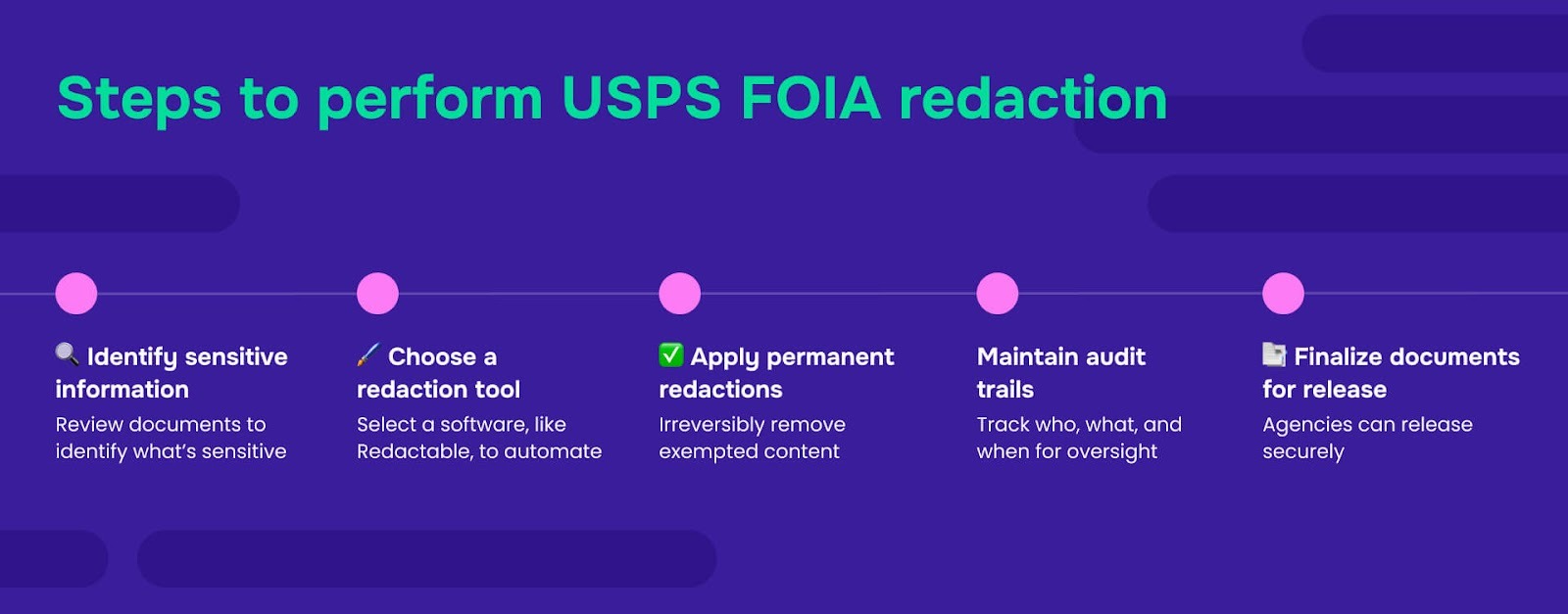
How to perform USPS FOIA redaction

Managing FOIA requests requires careful handling and the right tools. Steps include:
1. Identify sensitive information
Review records for personal, business, or security-related data. USPS must ensure accuracy to avoid legal or reputational risks.
2. Choose a reliable redaction tool
Manual redaction is time-intensive and prone to mistakes. Redactable automates the process, increasing accuracy and efficiency.
3. Apply permanent redactions
Redactable uses AI-powered detection to find and remove sensitive information across large datasets. Exemption codes can be applied for transparency and consistency.
4. Maintain audit trails
Every redaction action is logged, showing who made the change and why. This audit-ready documentation strengthens compliance and accountability.
5. Finalize and release documents
With all sensitive content permanently removed, USPS can securely release responsive records to the requester.
Redactable’s AI-powered FOIA redaction software

Redactable offers a comprehensive solution designed for federal agencies like USPS, ensuring that FOIA requests are processed securely, consistently, and efficiently.
Key features and benefits:
- custom redaction codes – apply USPS-specific FOIA exemption codes with ease
- batch document upload – upload and process large volumes of files simultaneously
- AI-powered detection – automatically detect PII, financial records, operational details, and other sensitive data
- detailed audit logs – track every redaction action for compliance reporting
- secure and complete redaction – remove text, metadata, images, and hidden data permanently
- collaboration tools – allow USPS FOIA officers and legal teams to work together with role-based permissions
- privilege log generation – automatically create logs for privileged or exempt information
- workflow and review options – preview redactions before finalization for greater accuracy
Redactable is ideal for federal agencies, legal teams, and USPS FOIA officers who must manage complex requests under strict deadlines.
How to perform USPS FOIA redaction

Managing FOIA requests requires careful handling and the right tools. Steps include:
1. Identify sensitive information
Review records for personal, business, or security-related data. USPS must ensure accuracy to avoid legal or reputational risks.
2. Choose a reliable redaction tool
Manual redaction is time-intensive and prone to mistakes. Redactable automates the process, increasing accuracy and efficiency.
3. Apply permanent redactions
Redactable uses AI-powered detection to find and remove sensitive information across large datasets. Exemption codes can be applied for transparency and consistency.
4. Maintain audit trails
Every redaction action is logged, showing who made the change and why. This audit-ready documentation strengthens compliance and accountability.
5. Finalize and release documents
With all sensitive content permanently removed, USPS can securely release responsive records to the requester.
Redactable’s AI-powered FOIA redaction software

Redactable offers a comprehensive solution designed for federal agencies like USPS, ensuring that FOIA requests are processed securely, consistently, and efficiently.
Key features and benefits:
- custom redaction codes – apply USPS-specific FOIA exemption codes with ease
- batch document upload – upload and process large volumes of files simultaneously
- AI-powered detection – automatically detect PII, financial records, operational details, and other sensitive data
- detailed audit logs – track every redaction action for compliance reporting
- secure and complete redaction – remove text, metadata, images, and hidden data permanently
- collaboration tools – allow USPS FOIA officers and legal teams to work together with role-based permissions
- privilege log generation – automatically create logs for privileged or exempt information
- workflow and review options – preview redactions before finalization for greater accuracy
Redactable is ideal for federal agencies, legal teams, and USPS FOIA officers who must manage complex requests under strict deadlines.
Frequently asked questions
Requests can be submitted via the USPS FOIA Portal, by mail, fax, or email. A clear description of the requested records is required. USPS provides guidance on its FOIA website to help requesters correctly format their submissions.
The statutory deadline is 20 business days, though extensions may apply for complex or multi-office requests. Requesters are notified if additional time is needed, along with an explanation of the delay.
Yes. Fees vary depending on the requester type and may include search, review, or duplication costs. Fee waivers are available in certain cases. USPS will notify requesters of potential costs before processing continues.
Exempt records include PII, security-sensitive data, confidential vendor contracts, and law enforcement files. These protections help maintain privacy, safeguard operations, and prevent harm to public safety.
Yes. Appeals must be filed with the USPS General Counsel’s Office within the timeframe specified in the denial notice. Appeals are reviewed independently to determine whether the denial should be upheld or reversed.
Yes, but only certain tracking and delivery records are available. Information tied to specific individuals or ongoing investigations may be withheld under privacy or law enforcement exemptions. USPS may also limit access to protect operational integrity.
Redactable automates redaction, ensuring exempt information is permanently removed while keeping full audit trails for compliance. This reduces the risk of accidental disclosure and improves the efficiency of USPS FOIA workflows