In litigation and regulation audits, the volume of data under review continues to grow. Email chains, text messages, shared drives, contract drafts, internal reports, and scanned archives all flow into discovery. As that volume increases, so does the risk of disclosing something that should never leave your control.
Redaction is increasingly routine for legal teams and business operations due to those risks. It protects attorney-client privilege, shields trade secrets, supports compliance with privacy laws, and prevents unintentional disclosure during discovery.
Legal professionals have the responsibility to identify privileged legal documents and ensure they are properly redacted to be permanent and defensible.
What Is Privileged Information Redaction?
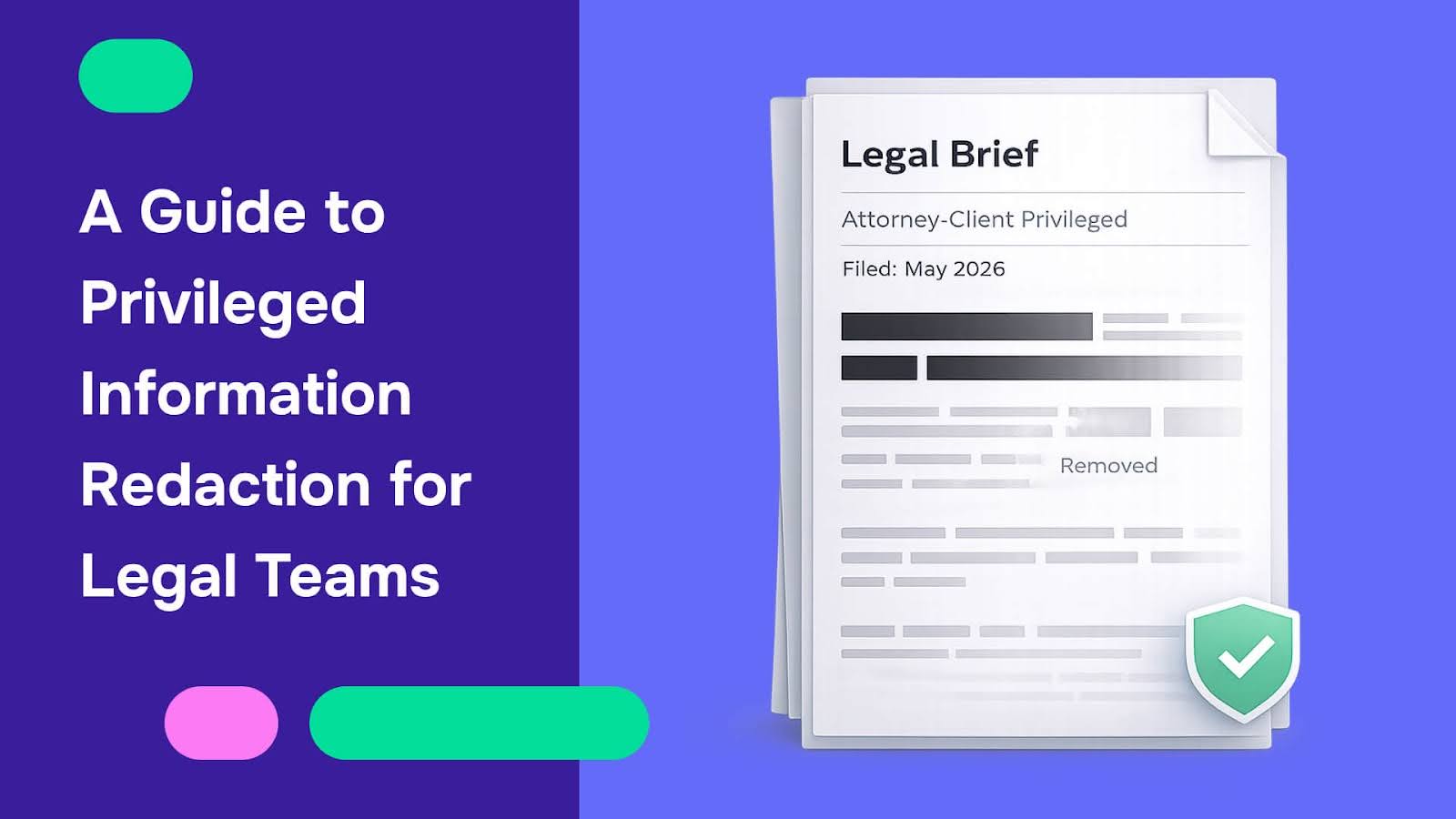
Privileged information redaction is the permanent removal of protected legal content from a document before it is produced. It allows a party to share responsive material while preserving attorney-client privilege or work product protections.
In practice, this often arises during document review. A single email thread may contain operational discussion, embedded legal advice, and internal commentary from counsel. Instead of withholding the entire document, the producing party may redact information that reflects legal advice or litigation strategy and produce the remainder.
The key word is permanent. To properly redact documents, the underlying data must be removed, not merely covered with a visual overlay. If hidden text can be recovered from document layers or metadata, the redaction has failed.
For organizations facing expanding discovery obligations, redacting sensitive information is no longer a small task handled on a case-by-case basis. It is an operational workflow that must scale.
Privilege Withheld vs Privilege Redactions vs Privilege Log
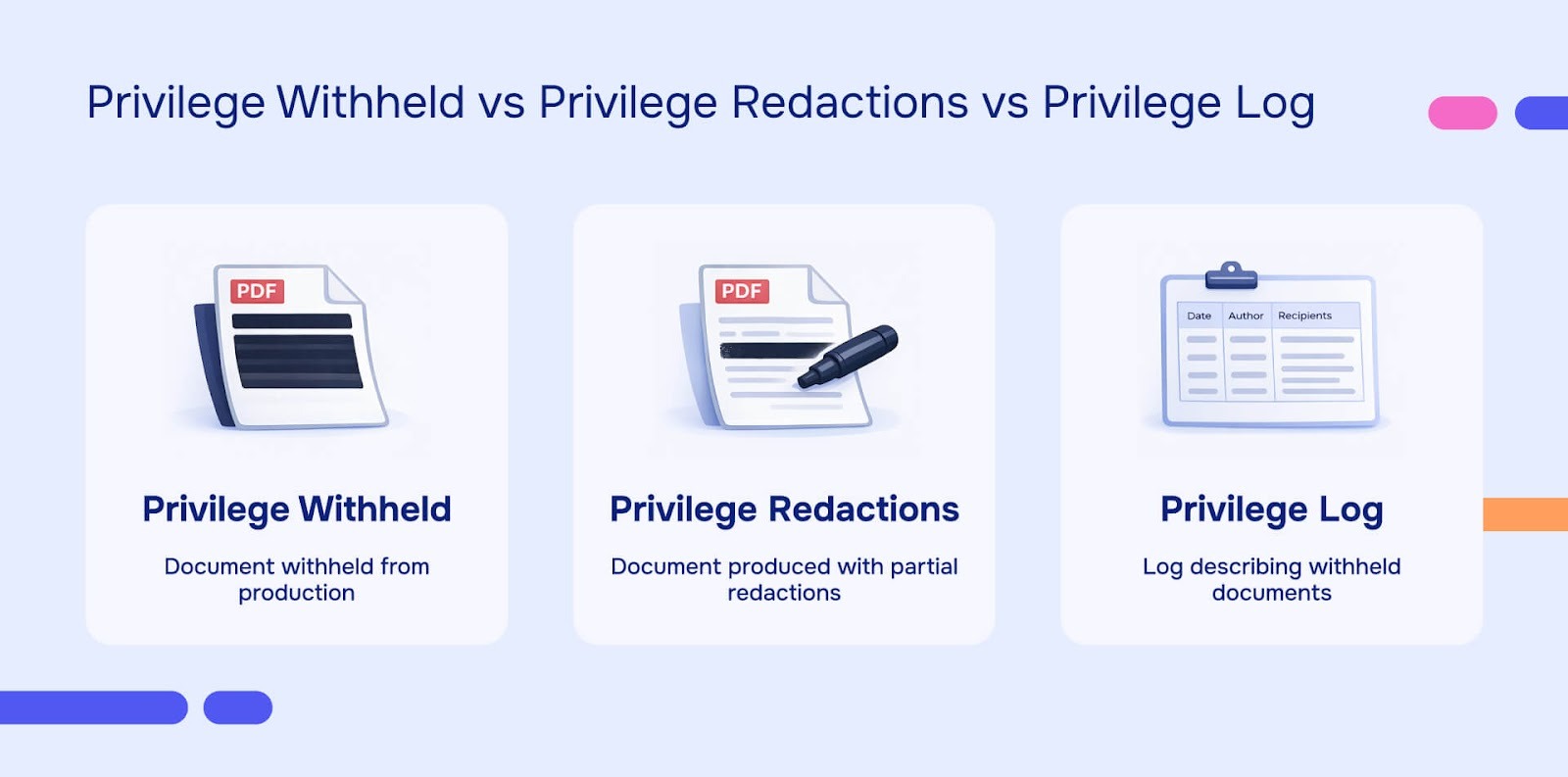
Privilege withheld refers to documents that are entirely protected under the attorney-client privilege or the work product doctrine. When a document is fully privileged, it is not produced at all.
Instead, it is identified in a privilege log consistent with Federal Rule of Civil Procedure 26(b)(5)(A). Although the Federal Rules do not explicitly use the term “privilege log,” courts routinely require parties to describe withheld material in a way that allows others to assess the claim without revealing the protected substance. It typically identifies the date, author, recipients, general subject matter, and the basis for the privilege claim.
Privilege redactions apply when a document contains both protected and non-protected content. Rather than withholding the entire document, the producing party may redact information that reflects legal advice or litigation strategy and produce the remainder.
Determining what should be redacted and ensuring that only that information, and nothing more, is redacted can be difficult and requires significant attention to detail. During document review, teams must decide whether to withhold the document entirely or redact only the privileged portions, and then properly redact documents so that no underlying data remains accessible.
What Type of Sensitive Data Needs to Be Properly Redacted?
Privilege is only one category of protected content. In most offices or firms, teams must also evaluate confidential information and personal data governed by privacy laws.
Privileged Information
Privileged documents may include legal advice embedded in business communications, draft pleadings circulated for comment, internal memoranda reflecting counsel’s mental impressions, or strategy discussions about litigation risk. These materials are protected because disclosure could waive privilege.
During document review, reviewers must carefully distinguish between legal advice and purely business discussions. That line is not always obvious, which is why the redaction process must be deliberate and documented.
Confidential Business Information
Not all confidential material is privileged. A company’s trade secrets, internal pricing structures, proprietary algorithms, research data, acquisition plans, and strategic roadmaps may not qualify for attorney-client privilege. However, they may still be protected under a confidentiality agreement or court-issued protective order.
Failing to remove information of this nature can expose competitive advantages or create contractual liability. In some industries, including finance and healthcare, regulatory obligations may also apply.
Personal Data: PII and PHI
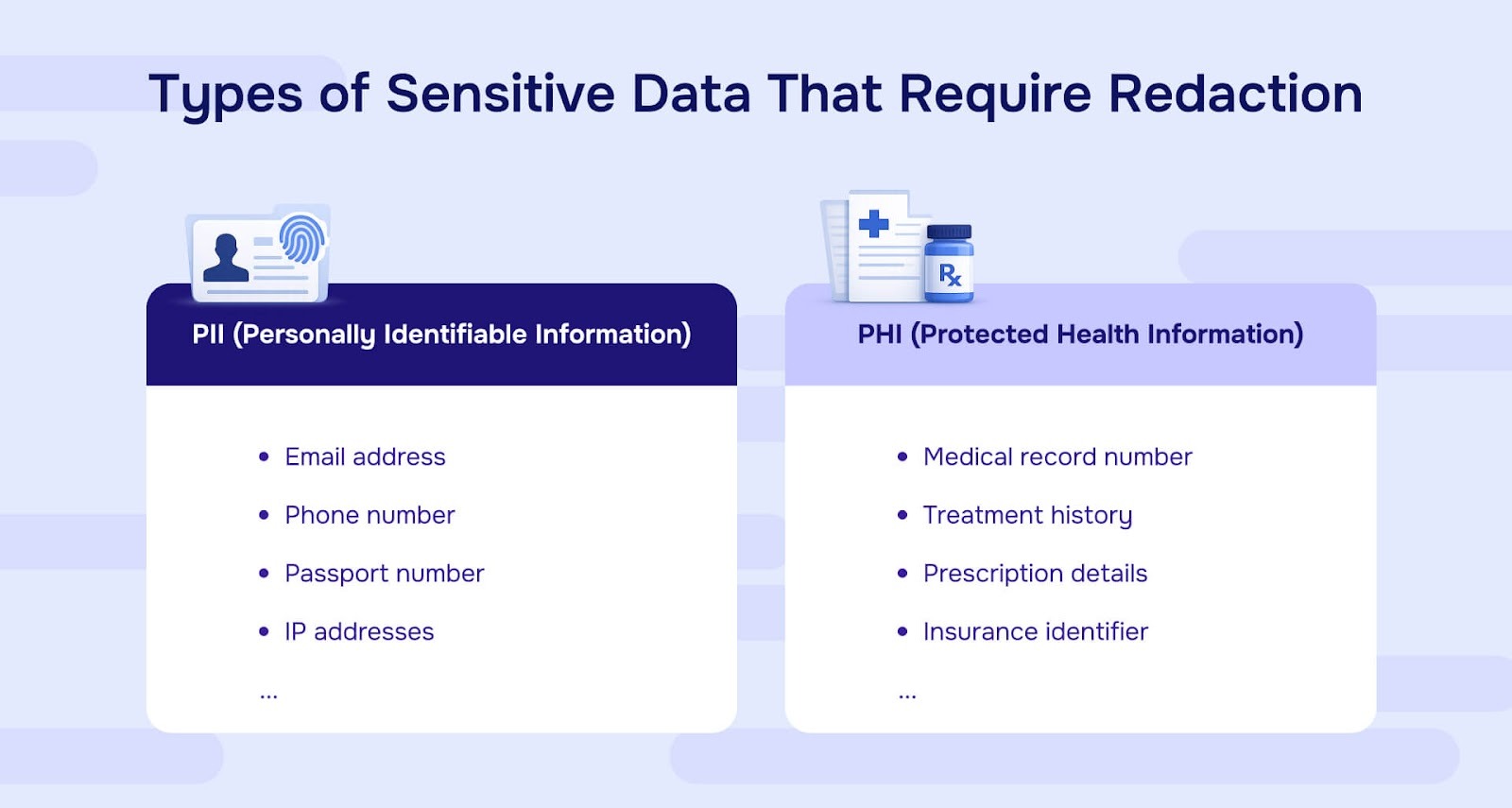
The scope of personal data requiring protection has expanded significantly in recent years. Legislation such as the General Data Protection Regulation and the California Consumer Privacy Act has broadened the definition of protected information and heightened the consequences of mishandling it.
Personal data includes personally identifiable information, often referred to as PII. Personal identifiable information can extend far beyond a name and the last four digits of a Social Security number. It may include:
- Dates of birth
- Driver’s license numbers
- Passport numbers
- Email addresses
- Phone numbers
- Biometric identifiers
- IP addresses
- Employee ID numbers
- Geolocation data
- Financial account number associated with an individual.
Even combinations of data points that could reasonably identify a person may qualify.
Protected Health Information, or PHI, includes the following:
- medical record numbers
- health insurance identifiers
- diagnostic information
- treatment histories
- prescription details
- billing records
- provider notes related to health condition or care
When you do not properly redact sensitive information such as PII or PHI, you open yourself to reputational harm and some serious fines, and your clients to identity theft and long-term financial fraud that can be difficult to reverse.
A Smarter Way to Handle Privilege Redactions
The traditional manual process of opening a PDF file and drawing black boxes over text is no longer cutting it. Not only is it inefficient, but it's also prone to human error, difficult to audit, is not always permanent, and doesn’t remove metadata.
Redaction tools are designed for managing large volumes of electronic documents. Automating the redaction process significantly reduces the time it takes to complete redactions and to do so consistently. Using the right redaction tool is just as crucial to avoid mistakes and make sure that redactions are permanent.
Redactable is built specifically for secure, cloud-based redaction. Its platform allows lawyers and other legal professionals to identify and redact information using AI-powered detection, which quickly identifies sensitive information across documents and keeps redactions consistent across teams. Built-in OCR makes scanned files searchable before redaction begins, which reduces the risk that hidden text is missed. The system permanently removes visible content and embedded metadata, too, so that you can redact documents without relying on fragile workarounds.
Book a demo to start redacting information with confidence and ease.