Using AI to work with sensitive documents has become routine. Legal teams feed contracts into AI summarizers. Healthcare organizations use AI to extract data from patient records. Compliance officers run policy documents through generative AI tools to check for gaps. Every one of those workflows carries a risk that most organizations have not fully addressed. The documents going into those AI systems still contain personal, protected, or privileged information that should have been removed first.
Responsible AI practices require controlling what you send to AI systems. For organizations in regulated industries, that means redacting sensitive data from documents before AI ever sees them.
What Responsible AI Means for Document-Heavy Organizations
Most responsible AI conversations focus on how AI models are built, including the training data used, the fairness of outputs, and the transparency of the system. For legal, healthcare, financial services, and government teams, though, there is a more immediate question: what happens to the sensitive data inside the documents you hand to AI tools every day?
Responsible AI principles, as defined by frameworks from NIST, Google, and the EU AI Act, consistently emphasize privacy, accountability, and data governance. Feeding unredacted patient records, client files, or financial documents into an AI system undermines all three, regardless of how responsibly that AI system was designed.
The Risk: What Happens When Sensitive Documents Meet AI
AI systems that process documents can retain, reproduce, or expose the information inside them. The risk varies depending on the tool and deployment model, but the categories of exposure are consistent:
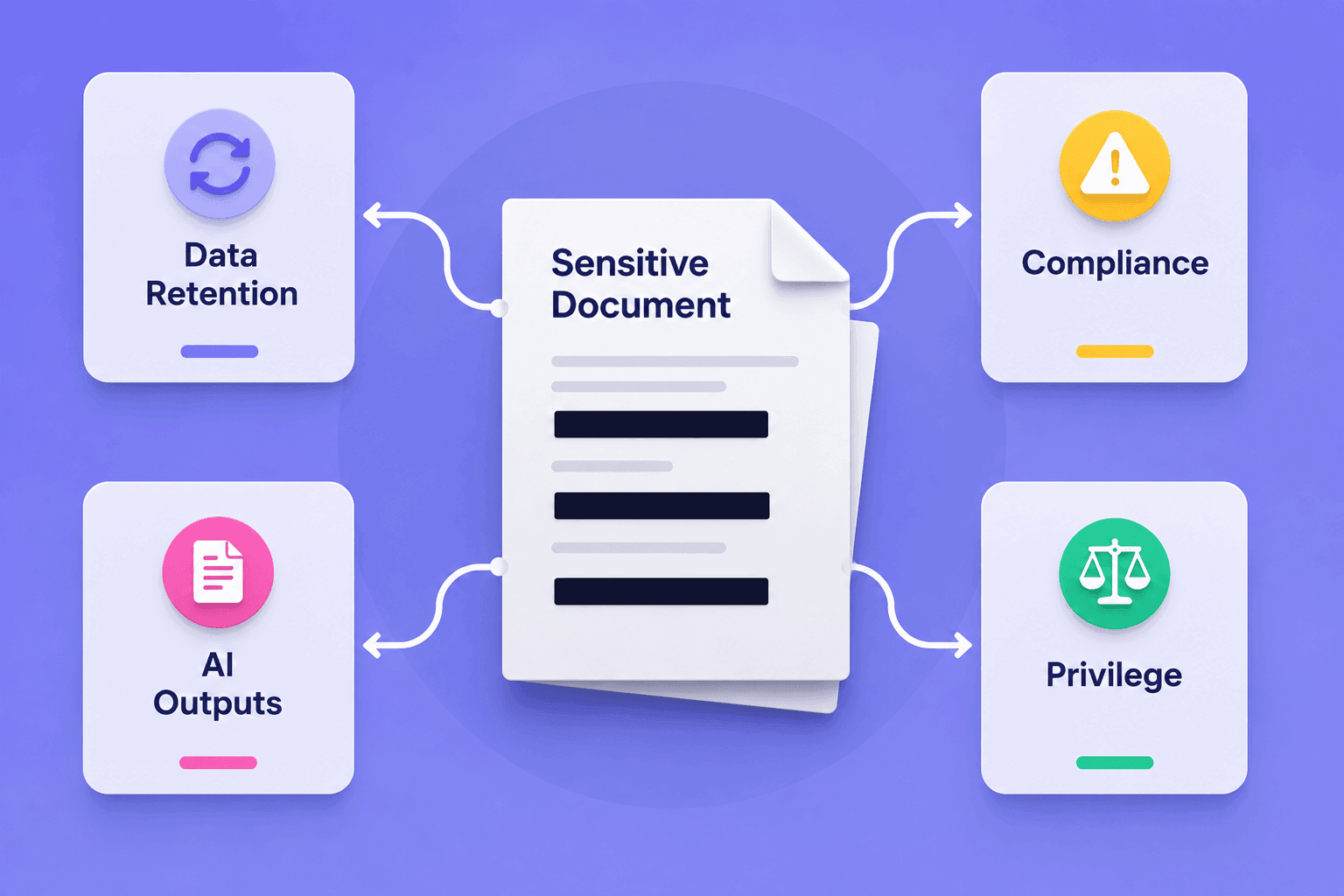
- Data retention by third-party AI tools: Many AI platforms retain uploaded documents for model improvement unless you explicitly opt out. Unredacted files sent to external tools may be stored, reviewed, or used in ways your organization never intended.
- Sensitive data in AI outputs: AI summaries, extracted tables, or generated reports can surface names, account numbers, medical codes, or other protected information that appeared in the source documents.
- Audit and compliance exposure: Regulations like HIPAA, GDPR, and the EU AI Act require documented controls around how personal data is handled. Without redaction, there is no paper trail showing sensitive information was protected before it left your organization. Documented redaction gives compliance teams the evidence that the right steps were taken.
- Privilege and confidentiality risk: Legal teams uploading client documents to AI tools risk inadvertent waiver of privilege if those files contain attorney-client communications that were never sanitized.
None of these risks requires an AI system to behave badly. They follow directly from sending the wrong input.
What Responsible AI Practices Are Required Before AI Use
Responsible AI governance starts with the data. Frameworks like the NIST AI Risk Management Framework and the EU AI Act both require organizations to be accountable for how personal and sensitive data is handled throughout any AI workflow, including at the point of input.
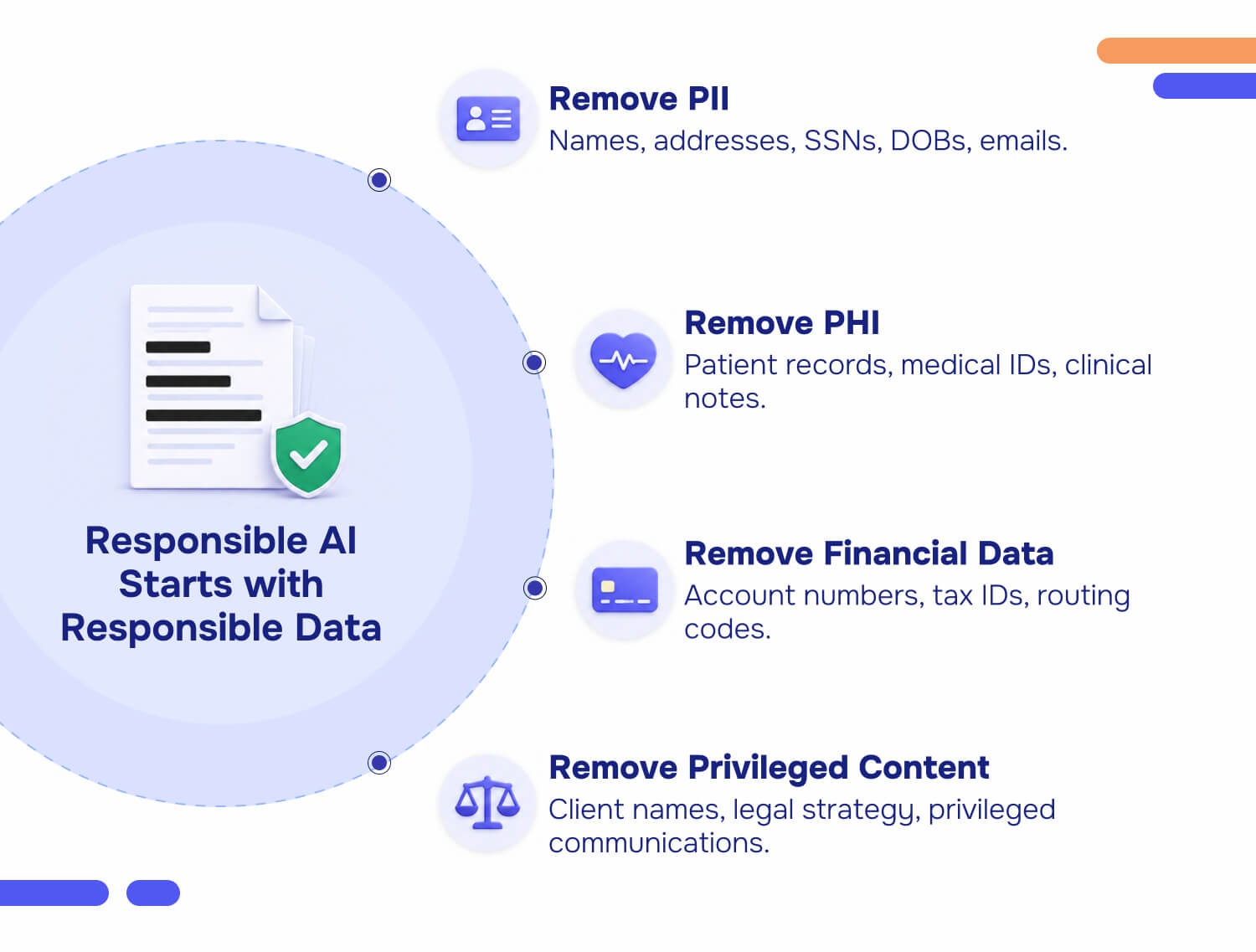
For organizations with document-heavy processes, that means redacting sensitive information from documents before they are processed by AI, including:
- Permanently removing PII: Names, addresses, Social Security numbers, dates of birth, and other personal identifiers should be removed at the file level.
- Removing PHI before healthcare AI use: All 18 HIPAA-protected identifiers must be stripped from patient records, clinical notes, and billing documents before they enter any AI-assisted workflow.
- Stripping financial identifiers: Account numbers, routing codes, tax IDs, and other financial data subject to PCI DSS, SOX, or GLBA should be redacted before documents reach AI tools.
- Clearing privileged content: Legal teams should remove client names, case strategy details, and privileged communications before using AI to analyze or summarize case files.
Covering text with a black box is not enough. AI systems that process PDFs at the data level can read through surface-layer annotations. True redaction permanently removes the content from the file, including from embedded metadata and content streams. That is what Redactable does.
How Redactable Supports Responsible AI Use
Redactable is AI-powered redaction software built for teams in regulated industries. Before you use AI on your documents, Redactable ensures they are clean.
- AI-Powered Detection: Automatically identify PII, PHI, financial data, and other sensitive content across PDFs, TIFFs, JPGs, and PNGs, including scanned documents via OCR.
- Permanent File-Level Removal: Redactions remove content from the file entirely, including metadata. No recovery through image enhancement or content stream inspection.
- Human Review Controls: AI flags sensitive content. Your team reviews and approves before the redaction is finalized.
- Custom Redaction Rules: Define patterns for organization-specific sensitive terms, such as client codes, case identifiers, and proprietary data fields.
- Bulk Import for High-Volume Workflows: Upload up to 100 documents at a time, each up to 5,000 pages, for large document sets before AI ingestion.
- Audit Trails and Redaction Certificates: Every redaction is logged, with a complete record of what was removed and when, creating defensible documentation for compliance.
How It Works
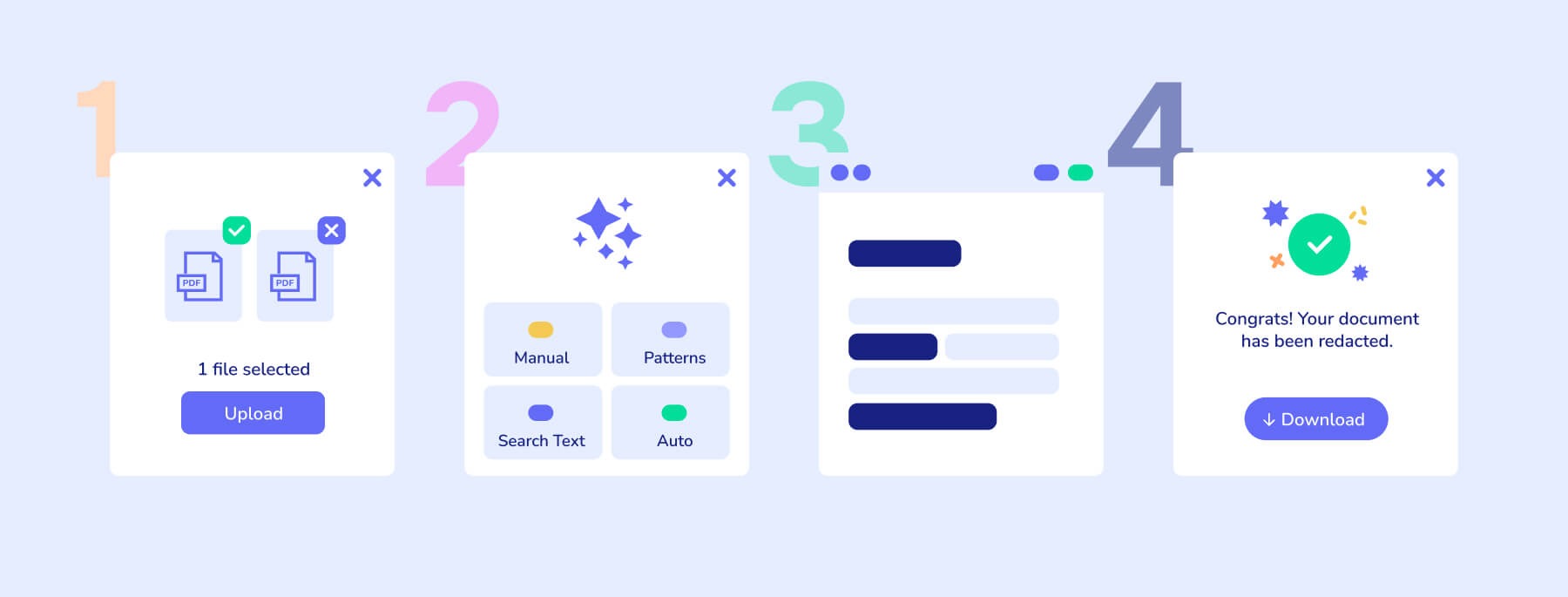
- Upload your documents (PDFs, TIFFs, JPGs, or PNGs) into Redactable.
- Select your redaction rules: PII, PHI, financial identifiers, or custom sensitive terms.
- Review and approve redactions in Redactable's visual dashboard. Your team makes the final call.
- Export clean, redacted documents ready for AI workflows, sharing, or archiving.
The Security Foundation Behind Responsible AI
Responsible AI use also requires a platform you can trust with the documents in your workflow. Redactable is built to meet the security standards required by regulated industries.
- SOC 2 Type II certified: Infrastructure, systems, and controls are independently audited.
- HIPAA compliant: Sensitive health information is handled in accordance with HIPAA requirements.
- AES-256 encryption: FIPS 140-2 validated encryption at rest and TLS 1.2+ in transit.
- Data stored in the US: Hosted in private AWS clouds with multi-zone redundancy.
- Continuous vulnerability scanning: Regular system scans identify and mitigate potential risks.
- Participates in EU-U.S., UK Extension, and Swiss-U.S. Data Privacy Frameworks
See the full details on Redactable's security page.
Responsible AI Governance and the EU AI Act
The EU AI Act, fully applicable from August 2026, requires organizations deploying AI in regulated contexts to demonstrate accountable data governance. High-risk AI applications in healthcare, legal, financial services, and government must document how personal data is handled, protected, and controlled within AI workflows.
Redacting documents before they enter AI workflows directly supports that requirement. Audit trails showing what was removed, when, and by whom provide compliance teams with the documented evidence required by governance frameworks.
Why Organizations in Regulated Industries Choose Redactable
- Built for legal, healthcare, financial services, and government teams
- Processes a 10-page document in less than 2 minutes
- SOC 2 Type II certified and HIPAA compliant
- Supports PDF, TIFF, JPG, and PNG at scale
- Integrates with Google Drive, Box, Dropbox, OneDrive, and Clio
- API access available for embedding redaction into existing document workflows
Stop sending sensitive documents to AI tools unredacted. Try Redactable for free and see how document redaction fits into your responsible AI workflow.