AI Redaction for Artificial Intelligence Teams
Protect sensitive data in every document dataset with AI-powered redaction.

AI-powered precision redacts sensitive information instantly
Reduce human error and redaction time by up to 98%
SOC 2 Type II and HIPAA-compliant platform




.svg)
Results for AI Teams That Use Redactable
.svg)

The Real Challenges With AI Data Redaction

Training Datasets Contain Too Much Personally Identifiable Information to Review Manually

Unredacted Employee Training Data Creates Compliance and Data Security Risks

Internal AI Tools Expose Employee and Organizational Data to Unnecessary Risk
.svg)
Manual Methods Can't Scale With AI Document Processing Volumes

Improper Redaction in AI Systems Has Legal Consequences
Medical records, legal documents, financial data, and customer service transcripts all contain personally identifiable information that must be protected before feeding them into machine learning models. Manually reviewing every document before training is unrealistic when AI teams process millions of records.
A single unredacted dataset might expose patient records to your large language model, leak client details in your retrieval system, or embed Social Security numbers in your training corpus. Each exposure creates regulatory compliance violations and data breaches that traditional redaction methods can't prevent at scale.
Companies are giving AI models access to internal systems for organizational mapping, employee data analysis, and knowledge repositories, not just customer-facing tasks. When a large number of employees can query these tools, sensitive HR records, compensation details, and personnel files become available to anyone with access unless they're redacted first.
AI model performance depends on how much data it can safely ingest. When manual redaction bottlenecks how many documents make it into training, the model never reaches the volume it needs to perform well. Human review of every page introduces error, slows down machine learning workflows, and caps the data volumes artificial intelligence applications require to deliver strong outcomes.
Healthcare sector applications, financial institutions using AI, and legal AI systems all face strict data privacy regulations. A single improperly redacted source document that makes it into your training data can expose your organization to legal repercussions, compliance violations, and identity-theft liability affecting thousands of data subjects.

Why AI Teams Choose Redactable
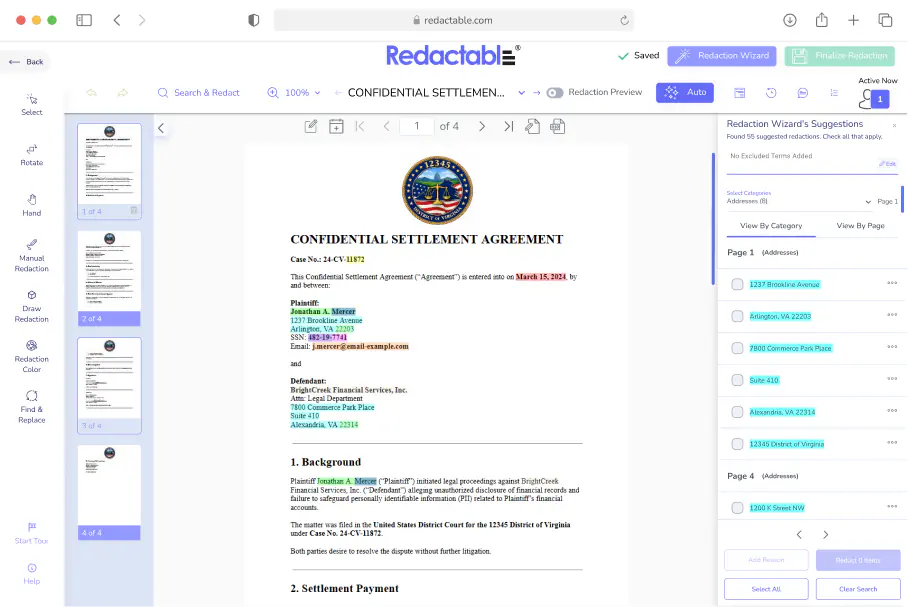

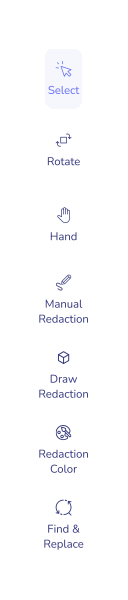
AI-Driven Redaction Tools That Automatically Detect Sensitive Data
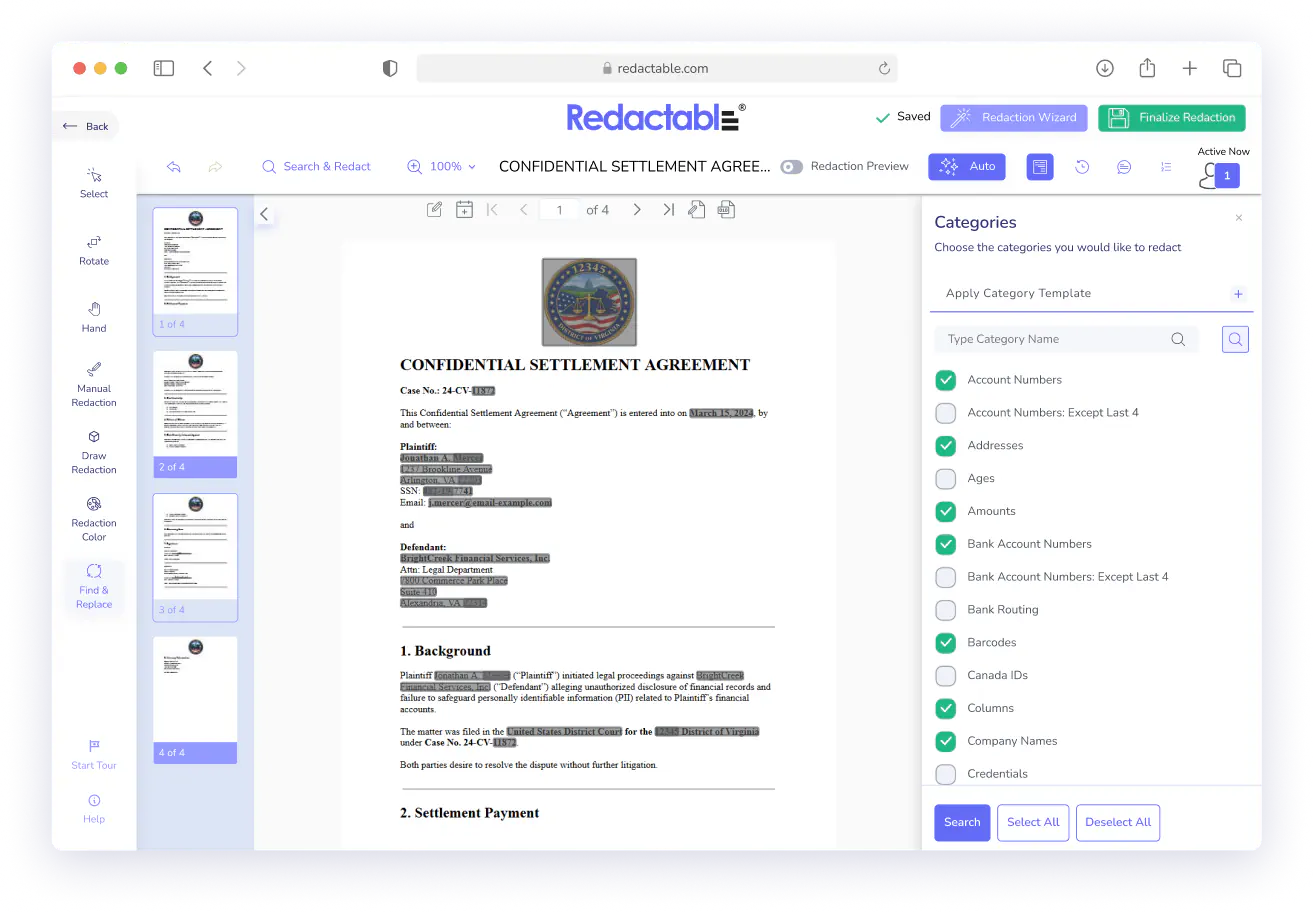
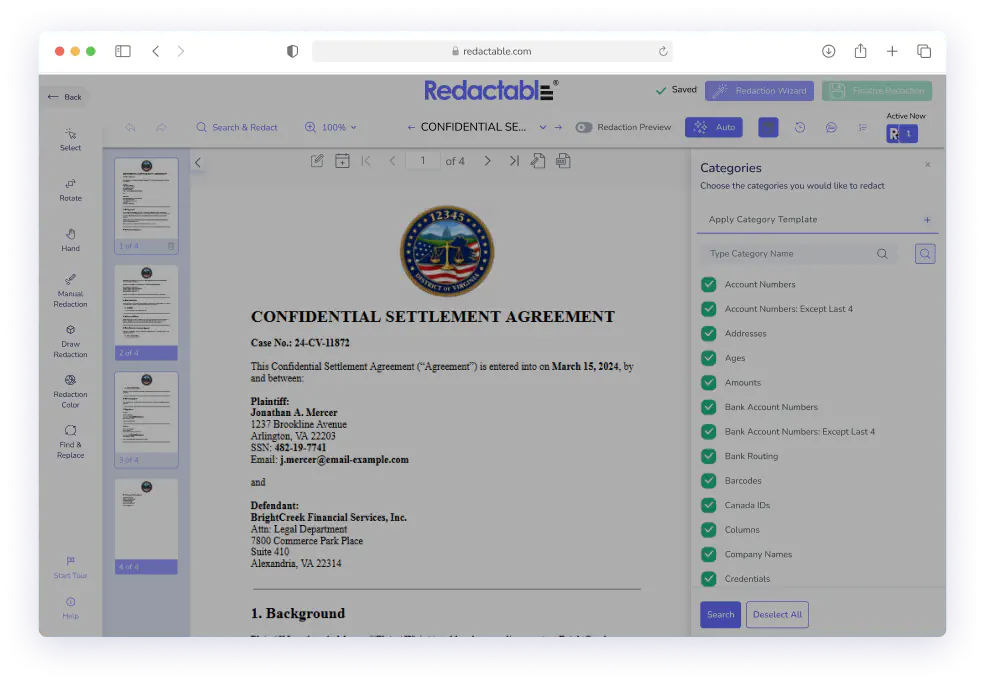
Redactable's AI-powered redaction scans every document and flags the data types that matter most for machine learning: Social Security numbers, medical record numbers, financial account details, transaction histories, patient names, and other confidential data across all document types.
All you have to do is review what's flagged and confirm.
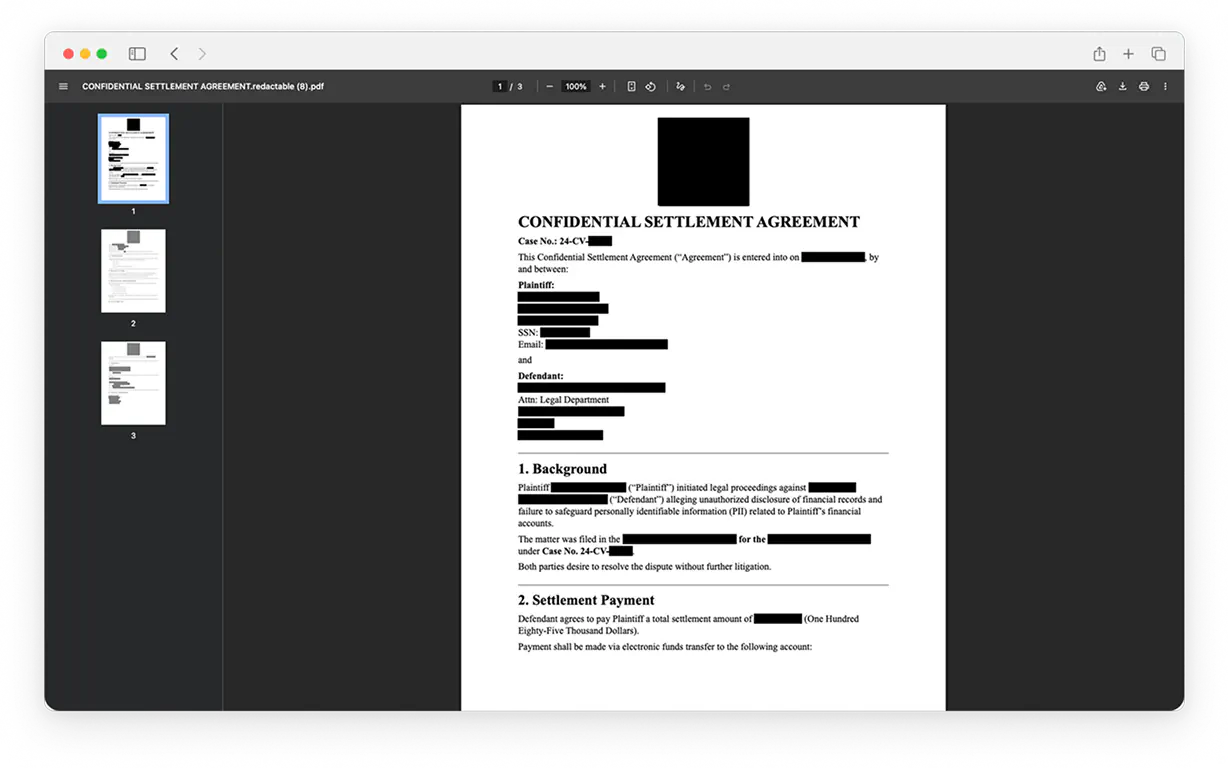
Permanent Data Redaction That Protects Your Training Corpus
Blacking out text in Adobe doesn't delete the underlying data. Redactable permanently removes sensitive information from both the visible document and any embedded metadata or file properties, so nothing can be recovered after the file enters your AI training pipeline.
This helps AI teams ensure compliance with GDPR, HIPAA, CCPA, and other data privacy regulations while maintaining data security.
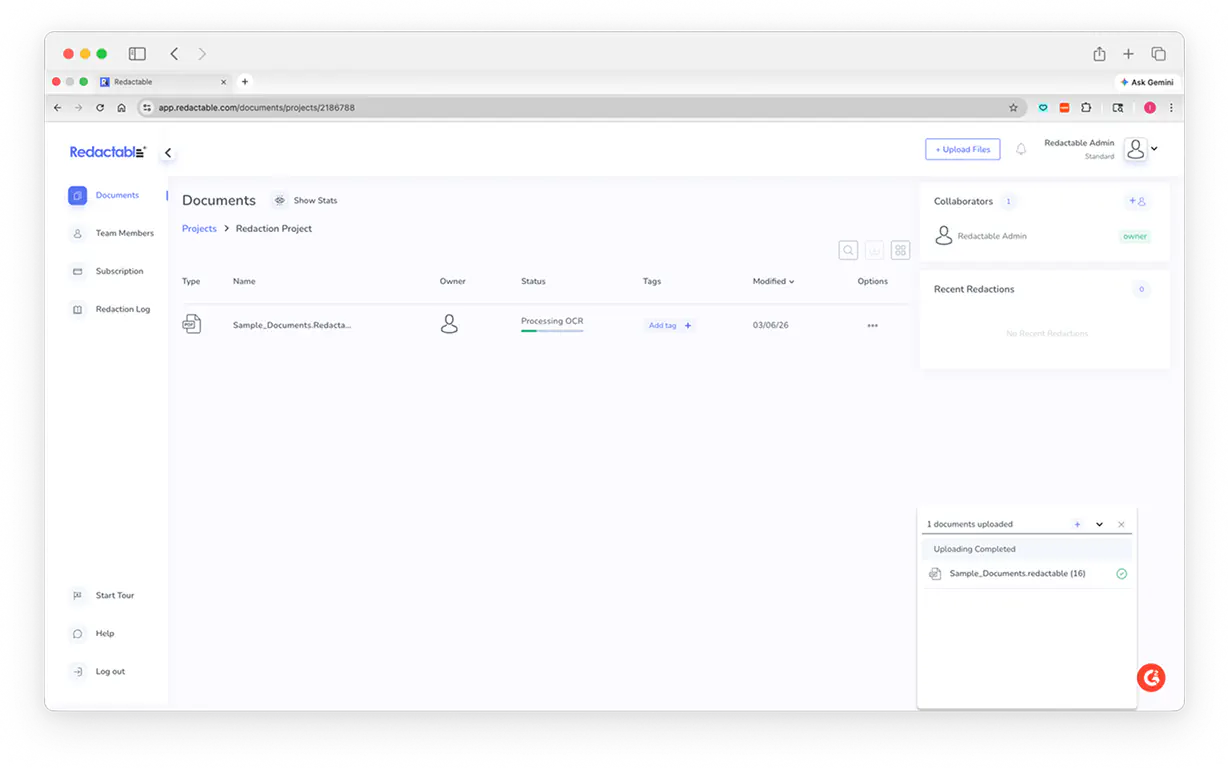
Natural Language Processing for Scanned Documents and Legacy Files
Older medical records, handwritten legal documents, scanned financial statements, and image-based PDFs present a problem for traditional redaction methods.
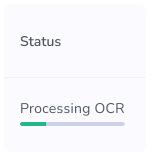
Redactable's built-in OCR and entity recognition convert image-based files into fully searchable documents before scanning for confidential information, so scanned documents get the same detection accuracy as native digital files.
Automated Audit Trails for Regulatory Compliance and Data Protection
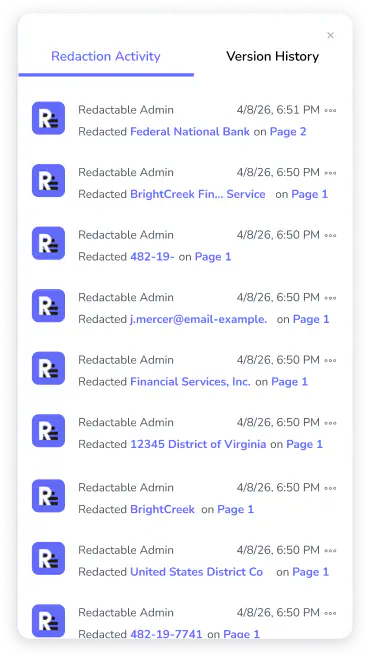
Every redaction performed in Redactable (who redacted something, when, what was removed, and from which page) is logged automatically.
The system generates redaction logs for compliance audits and regulatory reviews, providing your AI team with the documentation needed to demonstrate proper redaction without manual recordkeeping that slows down document processing.
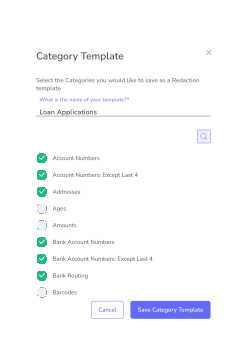
AI Redaction Templates for Common Document Types
Medical records, legal documents, financial statements, and customer transcripts follow predictable structures. Build a redaction template once for each document type and apply it across millions of files with one click.
Your AI team gets consistent data redaction across your entire training corpus without starting from scratch or risking the errors that come from relying on manual methods to safeguard sensitive information.
How Redactable Works


Six Ways to Protect Sensitive Data in Artificial Intelligence Documents

See What Our Clients Have to Say
Security & Compliance Info

Ready to Get Started?
Frequently Asked Questions
AI data redaction is the process of permanently removing sensitive information from training datasets, legal documents, and medical records before feeding them into machine learning models. This includes personally identifiable information, financial details, and medical data. Proper redaction is required under GDPR, HIPAA, CCPA, and other data privacy regulations. A single unredacted training dataset contains enough personally identifiable information PII to cause data breaches or regulatory violations.
AI teams are responsible for identifying and removing sensitive data before processing documents for machine learning. Personally identifiable information includes Social Security numbers, names, addresses, and medical record numbers. Financial data requiring redaction includes account numbers, transaction histories, and credit card details. In healthcare AI, patient records must be redacted to remove protected health information. Beyond the visible text, embedded metadata in digital files can contain author names, edit history, and confidential details that must be permanently removed.
Healthcare sector AI applications must protect patient records under HIPAA before using them for machine learning training. Medical records contain sensitive information that must be redacted to prevent data exposure. The challenge is that patient records often reference multiple individuals (family members, referring physicians, and other patients). Effective AI redaction software must remove personally identifiable information about everyone while preserving the relevant clinical information needed to train diagnostic models.
Yes. AI-driven redaction uses natural language processing and entity recognition to identify sensitive data across legal documents, medical records, financial statements, and other unstructured data formats. Machine learning algorithms adapt to different document structures. Built-in OCR technology converts scanned documents into searchable text before running redaction, ensuring legacy files receive the same data protection as digital-native documents.
Improper redaction occurs when AI teams either miss sensitive information or remove too much data needed for model training. Redactable's AI technologies flag all instances of personally identifiable information PII and confidential data, then provide human oversight before finalizing. Custom templates let you define exactly what should be redacted for each use case. The preview function shows redacted documents before processing, giving your team the chance to verify that sensitive information is properly redacted while relevant information remains intact.
While AI-driven redaction automatically identifies sensitive data, human oversight remains important for quality assurance. Redactable combines machine learning automation with human review: the AI technologies flag potential sensitive information across millions of records, then human reviewers verify the suggestions before finalizing. This hybrid approach delivers the speed and detection accuracy of AI redaction while maintaining the judgment that only humans provide.
Yes. Redactable supports batch uploads of up to 100 documents, with each document containing up to 15,000 pages. AI redaction templates let your team apply consistent policies across millions of records. For AI teams training large language models, document processing stays manageable without pulling data scientists away from model development.
Traditional redaction methods rely on manual review, which introduces human error when people miss sensitive information across thousands of pages. AI-powered redaction eliminates these risks by using machine learning algorithms that automatically identify every instance of personally identifiable information and other confidential information. The automation ensures compliance with data privacy regulations while generating audit trails that traditional methods cannot provide.
Yes. Redactable offers a free trial with no credit card required. Your AI team can upload real training data, run the AI redaction detection, and see exactly how the platform fits your workflow.

Over 98% time savings with AI-powered redaction

