Schools collect more data on students than ever before. Names, addresses, health records, behavioral patterns, academic performance, and digital activity logs. Most of that data is protected by federal law. Much of it is still being exposed. A staggering 96% of EdTech apps share data from students with third parties, often without explicit consent. Schools now use an average of 1,400 digital tools per month (nearly triple the number from four years ago), and each one creates another potential gap in education data security.
Summary
Key takeaways:
- 96% of EdTech apps share personally identifiable information of students with third parties, often without parental knowledge
- Real consequences: Over 1,600 data breaches have been reported in schools since 2016, exposing students to identity theft, discrimination, and long-term digital profiling
- Federal and state data protection laws: FERPA, COPPA, PPRA, and state-level statutes all set the floor, but following the laws and achieving student data privacy and security requires active effort, not just awareness
- Redaction removes sensitive student information from documents permanently, safeguarding data and making it impossible to exploit even if a breach occurs
- Learn more about how schools can protect sensitive student data while maintaining educational innovation and student learning
Who it's for:
- School administrators, compliance officers, and IT leads managing student recordkeeping, FERPA obligations, and third-party vendor oversight
- K-12 and higher education staff who handle data, use EdTech and AI tools, or need to understand what the law requires day-to-day
- Parents and EdTech vendors who want to understand their rights and responsibilities under FERPA, COPPA, and PPRA
The student data protection problem
Every school day, students interact with a dozen or more digital platforms. Each login leaves a record. Each assignment leaves a data point. Individually, those data points look harmless. Collectively, they form a detailed profile of a child's academic performance, behavioral tendencies, personal information, and family circumstances, all of which schools are legally required to protect to ensure compliance and student privacy.
The data volume challenge
The average school uses 1,400 digital tools per month. This number has grown exponentially from an average of 470 just four years ago. Each tool collects a different slice of student information:
- Personal details and family information
- Academic performance and learning patterns
- Behavioral trends and social interactions
- Digital engagement footprints
- Health records and disability status
- Biometric data, in some districts
Why data exposure puts students at risk
96% of these apps share student data with third parties. The downstream risks go beyond a single data privacy breach. Compromised health records or behavioral data can follow a student for years, contributing to profiling, discrimination, and identity theft. Data breaches in education have also been directly linked to bullying and reputational harm for the students involved.
What happens when education & student data is exposed
When student records move outside a school's control through a data breach, unauthorized third-party sharing, or inadequate redaction before disclosure the consequences of breaking student privacy are concrete and lasting.
Breach incidents and legal consequences
The surge in EdTech tools in the education sector has brought with it a rise in security vulnerabilities. For instance,the FTC fined Edmodo $6 million for sharing data without authorization. The K12 SIX Cyber Incident Map documents cyberattacks on school districts going back to 2016, with over 1,600 data breaches on record. Human error remains one of the leading causes of data exposure and breaking of student privacy laws in educational institutions. Failures to protect student privacy include staff mishandling records, improperly sharing documents, or failing to redact personally identifiable information before release. The introduction of artificial intelligence tools in education is accelerating this risk: AI systems require vast amounts of data to function, and many schools lack the trained data protection staff to vet those tools properly.
Long-term effects of student data exposure
The effects of student data exposure extend well past the initial security breach. In Los Angeles Unified School District,concerns about stored data surfaced after their AI-powered assistant provider encountered financial difficulties.
Some of the lasting effects of data exposure include:
- Exploitation for targeted advertising
- Increased risks of student's identity theft
- Creation of detailed digital profiles with academic, behavioral, and personal data
- Unapproved commercial use of student data
- Bullying or discrimination stemming from exposed health or behavioral information
To address these risks, initiatives like MIT RAISE are equipping schools with tools to improve data privacy. Their approach focuses on transparency, compliance with privacy laws, and regular security audits. With the rapid expansion of EdTech, the need for stricter regulations and better education data security has never been more urgent.
Federal data protection laws and privacy acts governing student records
Education and student data protection in the United States is shaped by several overlapping federal statutes. Understanding what each one covers and where the gaps in laws exist is a legal requirement for public schools and higher education institutions alike.
FERPA: The foundation of education data protection
The Family Educational Rights and Privacy Act (FERPA), passed under federal law and administered by the U.S. Department of Education, is the foundational data protection statute for schools. FERPA protects student education records, gives parents the right to review and request corrections to those records as a family educational right, and requires written consent before a school may share them with third parties.
When a student turns 18 or enrolls in a postsecondary institution, they become an "eligible student" under FERPA and all rights transfer from the parent to them directly. For higher education institutions, this means working directly with students on all record-related requests.
FERPA violations carry serious consequences: loss of federal funding, U.S. Department of Education investigations, legal action, and reputational harm. Schools must treat education records, including report cards, disciplinary files, and health records as protected data, not just administrative paperwork.
COPPA, PPRA, and the laws that work alongside FERPA
FERPA doesn't work alone. Three other federal statutes fill in the gaps:
The Children's Online Privacy Protection Act (COPPA) protects children under 13 by requiring parental consent before any online service collects their data. Schools that allow students to use third-party platforms must ensure those platforms comply with COPPA, and have written contracts requiring that compliance.
The Protection of Pupil Rights Amendment (PPRA) governs how schools handle sensitive student survey information. Under PPRA, parents must be notified before students participate in surveys that collect personal data on topics including family income, mental health, or political beliefs. Schools receiving U.S. Department of Education funding are subject to PPRA.
COPPA, FERPA, and PPRA are federal floors. They set the minimum standard.
State-level data protection laws and privacy acts
California leads on state-level student data protection. SOPIPA bans EdTech companies from selling data or using it for targeted advertising. The California Age-Appropriate Design Code Act raises the bar further, focusing on privacy-by-design requirements for platforms used by minors.
Other states have followed. Colorado has limited sharing of personal information from student records since 1963. Illinois protects student records under 5 ILCS 140. Schools operating in multiple states must track local policies across all jurisdictions, following both national and state laws.
Every school that shares data with a third-party vendor, like EdTech or AI tools, cloud platforms, or other online services should have a written data processing agreement in place. That agreement must require the vendor to comply with applicable data protection laws. Without it, the school assumes the liability.
Student data protection in practice: What schools need to do
Legal compliance defines the minimum needed. Actual data protection requires operational discipline. These are the practices that actually address privacy concerns and reduce potential risks.
1. Collect only what you need
Schools and EdTech providers should collect only the student data required for a specific, legitimate educational purpose. Data collected beyond that scope creates legal exposure and practical risk. With over 1,400 tools in use per month on average, minimizing data collection at the point of entry is one of the most effective ways to reduce breach potential.
2. Be explicit about data use and access
Schools must clearly communicate to parents, eligible students, and staff what data is collected, how it's used, who can access it, and how long it's retained. Data retention schedules should dictate when records are archived or destroyed, and those schedules should be followed consistently.
Transparency also applies to third-party vendors. Schools should publish or make available the list of external services that have access to student information, and those vendors should operate under written contracts that include data protection compliance requirements.
3. Apply real security controls
A University of Chicago and NYU study found that many EdTech tools launch without proper security checks. To address this, schools should use tools that have been pre-approved and follow strict security protocols for data protection like encryption and secure logins. Limiting access to sensitive data based on user roles and conducting regular security audits can further reduce risks.
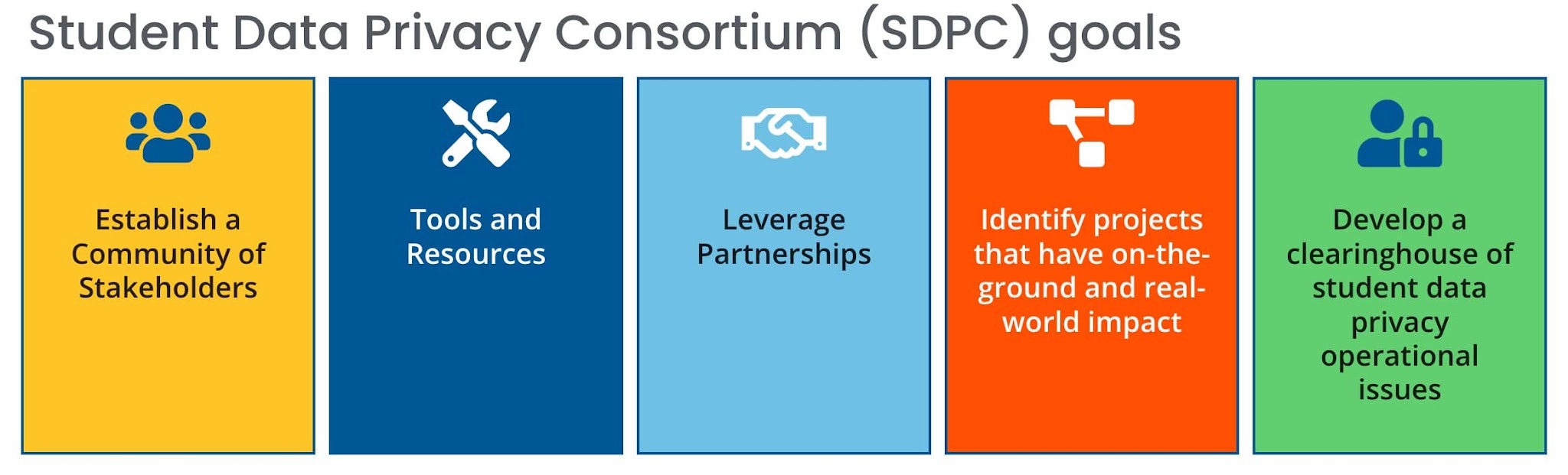
The Student Data Privacy Consortium (SDPC) provides schools with a list of pre-vetted tools that meet high security standards. This helps schools make smarter decisions about which tools to use while keeping student data safe.
Good cybersecurity practices include:
- strong passwords and multi-factor authentication
- encrypted data storage and transmission
- role-based access controls that limit who can view sensitive student records
- regular backups of data storage
- staff training on how to identify risks to student data privacy
- the appointment of a data protection officer to monitor compliance and manage data protection strategies across the school or district
Many schools lack trained data protection officers. This is a gap the U.S. Department of Education has specifically flagged. Appointing someone to this role, even in a part-time or shared capacity for smaller districts, gives compliance efforts a point of accountability.
4. Redact sensitive data before sharing documents
Security controls protect data while it's stored. They don't protect it once a document leaves your system. When schools share student records, like responding to a FERPA request, preparing documents for litigation, sharing research datasets, or providing records to partner organizations, the personally identifiable information in those documents is exposed the moment it's readable.
Permanent redaction of sensitive information in student records achieves what other security measures cannot. It completely removes private data from the risk equation. When sensitive student information is properly redacted before sharing or storing, it becomes impossible for bad actors to exploit this data, even if they gain unauthorized access.
AI-powered redaction tools can automatically identify personally identifiable information across thousands of student records, like names, identification numbers, health data, family information and permanently remove it before documents are shared. This approach scales where manual redaction cannot. Most privacy regulations covering schools, including FERPA, COPPA, and state-specific statutes like SOPIPA, require or strongly support redacting sensitive student information before disclosure.
How Redactable uses AI-powered redaction to protect student data privacy
Processing student records at scale requires a tool designed for volume and precision. Manual redaction creates risk at scale. Human error is a leading cause of data breaches in educational institutions, and the higher the volume of documents, the higher the probability of a miss.
Redactable is built for exactly this environment. The platform's AI redaction automatically detects and permanently removes sensitive student information, including names, identification numbers, health data, and other personally identifiable information, across large document sets. OCR processing handles scanned physical documents, not just digital files. Every redaction generates an audit trail and redaction certificate, giving schools verifiable documentation of compliance for FERPA, COPPA, and applicable state data protection laws.
What Redactable brings to education
For schools processing large volumes of student records, Redactable offers:
- AI-assisted detection of personally identifiable information across document types
- OCR processing for scanned physical documents and legacy paper records
- Audit trails and redaction certificates for compliance documentation
- SOC 2 Type II and HIPAA certification — independently audited by A-LIGN
- Support for bulk importing of documents, so high-volume record requests don't create bottlenecks
Schools that use Redactable can respond to FERPA record requests, prepare litigation documents, and share research datasets without exposing student personal information, and they have documentation to prove it.
Student data protection requires more than policy
Federal data protection laws give schools a clear set of obligations. Cybersecurity practices reduce breach risk. But neither addresses the most direct point of exposure: a document containing student personal information that gets shared in readable form.
Redacting data before it leaves your system is the step that closes that gap. Redactable makes that step fast, verifiable, and scalable. If you're processing a single transfer record or thousands of documents for a district-wide records request, our AI-powered tool is essential.
Are you an educator, school district administrator, or university official looking to strengthen your data protection? Experience firsthand how AI-powered redaction can transform your document security when you try Redactable for free today, or book a personalized demo to see how AI-powered data protection works in practice.