Have you ever opened a document and noticed bold black bars obscuring text sections? These black bars represent redacted information - deliberately concealed to protect sensitive data. Understanding what redaction means and why it's used has become increasingly important as digital privacy concerns grow.
What Does Redacted Mean? (Definition)
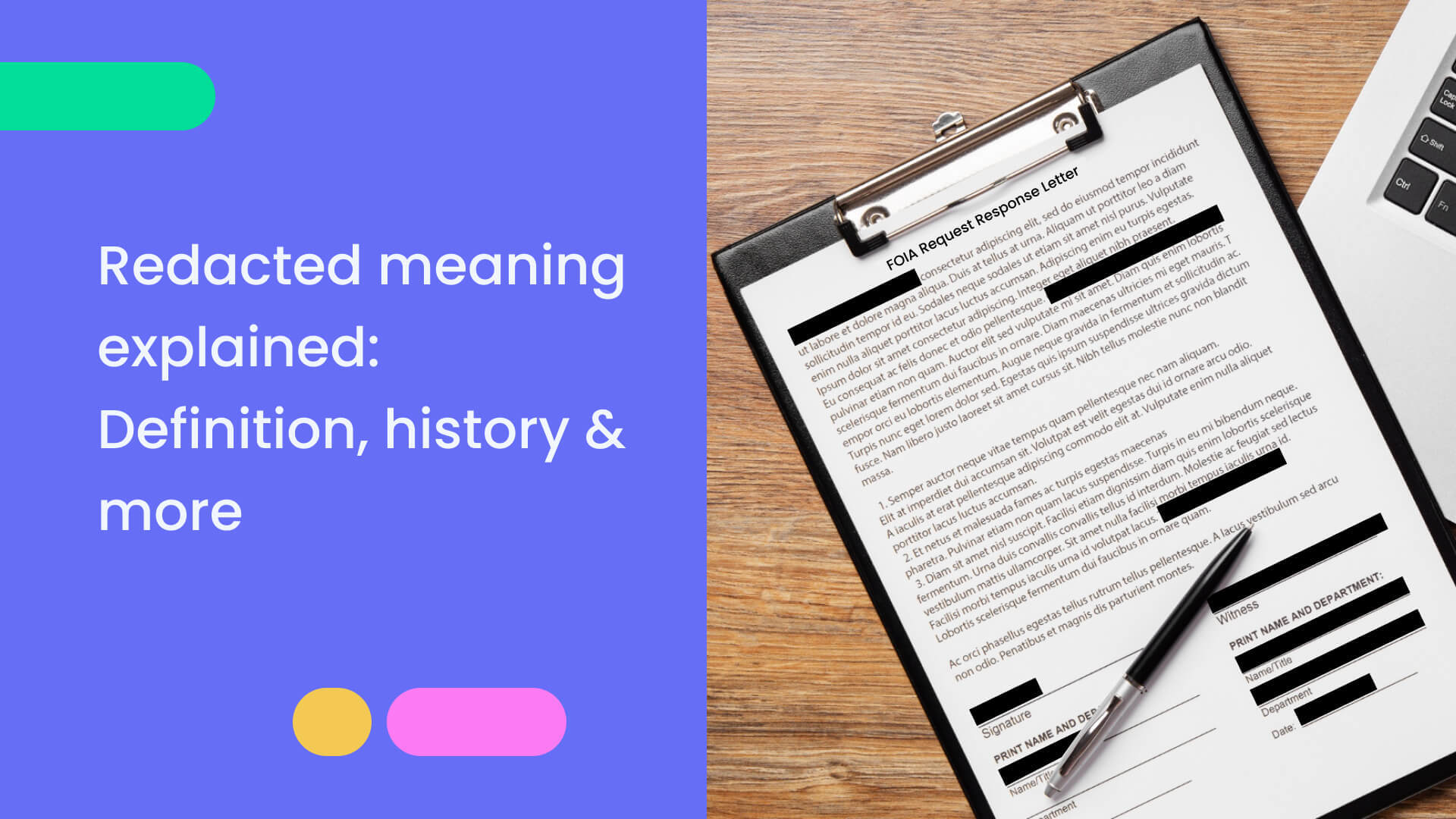
Redacted means that sensitive or confidential information has been deliberately removed or obscured from a document before sharing it publicly. When you see black bars covering certain words or sections in a document, those parts have been redacted to protect:
- Private personal details (names, addresses, Social Security numbers)
- Classified government information
- Legally sensitive content (attorney-client communications)
- Protected health information (PHI)
- Trade secrets and proprietary business data
Redaction permanently removes or conceals specific information while preserving the document's remaining context and readability.
Redaction vs. Censorship: What's the Difference?
While often confused, redaction and censorship serve fundamentally different purposes:
- Censorship suppresses or prohibits information to control what can be written, published, or communicated
- Redaction protects specific sensitive information within documents while preserving overall context and transparency
Redaction enables organizations to share documents publicly while safeguarding private data - it's a privacy protection tool, not a content control mechanism.
Redaction has been protecting sensitive information for centuries—from government secrets to personal data in everyday documents. It's more than just covering text with black markers; it's about permanently securing confidential information before sharing documents with others.
When done properly, redaction safeguards privacy and prevents data breaches. That's why it's essential for organizations handling sensitive information, from legal firms to healthcare providers. But here's the challenge: traditional redaction methods can leave your data exposed if not done correctly.
The origins of redacted documents: A historical perspective
Humans have been covering their tracks for centuries. Ancient scribes used knives to scrape sensitive data from parchment. Medieval monks would selectively erase or overwrite private information on ancient texts. It wasn’t until the Renaissance that redaction began to resemble its modern-day counterpart.
Fast-forward to the 20th century, and redaction became a wartime necessity. Governments blacked out sensitive parts of letters, maps, and documents to dissuade enemies' prying eyes. World War II’s infamous Verona Project saw encrypted Soviet messages painstakingly decrypted and then heavily redacted to protect intelligence methods.

Redaction methods through the years
Ancient era: Scratching and erasing
Redaction has always been about protecting secrets, but early methods needed to be more foolproof. In ancient times, scribes used sharp tools to scrape sensitive information off wax tablets or parchment. While this might have seemed adequate at first glance, determined individuals armed with time and magnifying glasses could often uncover the concealed information.
Pre-digital era: Ink, tape, and typewriters
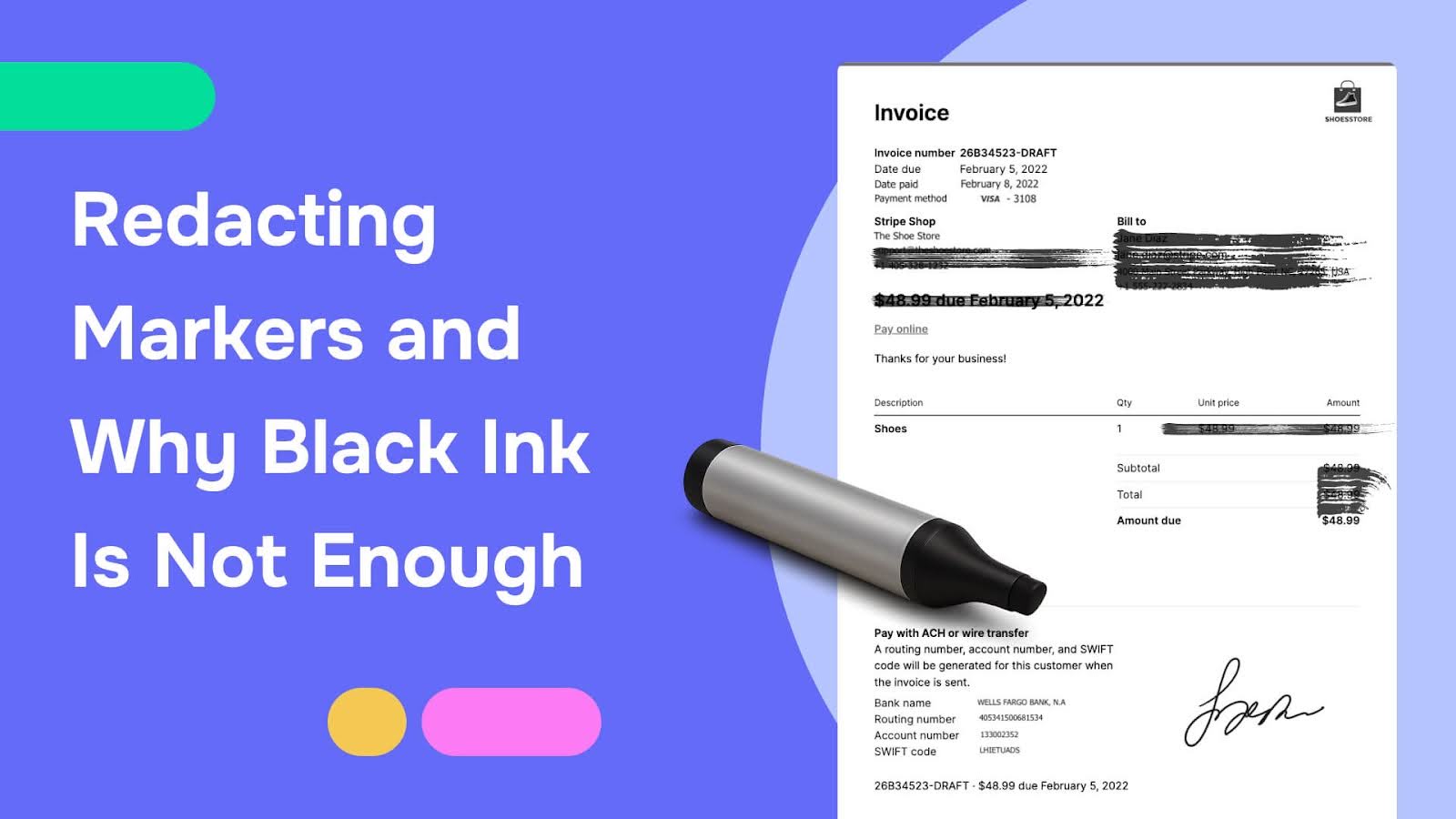
As writing tools evolved, so did redaction techniques. During the ink and typewriter era, sensitive information was often blacked out with ink or physically covered with strips of tape. Unfortunately, these methods weren’t as secure as they appeared. Clever individuals discovered ways to dissolve ink or carefully remove the tape, exposing the hidden text beneath.
Transitional phase: Photocopy-and-white-out (1990s)
The advent of photocopiers brought a new approach to redaction. A standard method involved covering sensitive information with tape or whiteout and photocopying the document to produce a "clean" redacted version. However, earlier photocopiers could have been more reliable. Tape could peel back mid-process, revealing unintended secrets. It was a step forward but remained prone to error.
Digital era: Early software challenges
With the rise of digital technology, redaction moved to the virtual realm. Early software tools, like basic PDF viewers, allowed users to black out text. However, these tools only obscured the content visually. The underlying text remained intact and retrievable through simple copy-paste techniques, creating a false sense of security and leading to countless data leaks.
Modern era: Reliable and secure redaction
Today, advanced redaction tools have transformed the process into a reliable and precise practice. Modern platforms like Redactable ensure that sensitive information is either permanently removed or securely hidden, eliminating the risks of amateur techniques. These tools provide robust safeguards, making unauthorized access virtually impossible—no magnifying glasses, tape, or digital workarounds required.
By organizing redaction’s evolution into precise eras, the progression from rudimentary methods to today’s sophisticated technologies becomes much easier to follow and appreciate.
Read also: Redacted Epstein files: Here is what went wrong

For a quick explainer with real examples, check out our video below:
How public records became classified and why
Not every document begins under lock and key. Most public records are open books until someone realizes they shouldn’t be. The criterion for classifying information varies but often includes:
- National security concerns
- Personal privacy (social security numbers, ID, etc.)
- Corporate secrets (because no one wants to be the following headline in Data Breaches Weekly)
Fun fact: In 2022, the United States government classified 49 million documents. That would be every word the average person has ever texted multiplied by 1,000 - hidden from view for safety.
Key Redaction Terms and Definitions
Classified Record: A document containing sensitive data restricted to authorized personnel only. Examples include:
- Government or state secrets (national security information)
- Trade secrets and proprietary business information
- Personally Identifiable Information (PII): Social Security numbers, addresses, financial records
- Protected Health Information (PHI): Medical records, patient data
Redaction: The systematic process of permanently concealing or removing sensitive information from documents to prevent unauthorized access while maintaining document integrity and context.
Unredacted: Documents where sensitive content remains visible and accessible. Unredacted files pose security risks including data breaches, identity theft, and regulatory non-compliance.
Redaction Software: Digital tools that automate the permanent removal or secure concealment of sensitive information. These solutions ensure regulatory compliance (HIPAA, GDPR, FOIA) while preventing human error in manual redaction processes.
Trust is a cornerstone of business success - mishandling sensitive information can instantly erode it. Clients and stakeholders expect their data to be handled with care. Redaction serves as both a safeguard and a signal - a protection against breaches and an organization’s commitment to privacy.
Redaction plays a pivotal role in mitigating risks. For example, when responding to Freedom of Information Act (FOIA) requests, organizations must strike a delicate balance: providing transparency while ensuring that sensitive or private information is thoroughly protected. Similarly, compliance with regulations like HIPAA and GDPR demands precise redaction to prevent breaches of protected health information (PHI) or personal data.
Redaction also extends to everyday business operations. Contracts, financial reports, and even email chains may contain sensitive information that must be shielded before sharing with external parties. In these scenarios, redaction prevents costly errors and demonstrates a commitment to professional integrity and data security.
Redaction as a legal requirement
According to 2023 cybersecurity reports, over 58% of U.S. companies experienced at least one data breach, with improper document handling and inadequate redaction contributing to a significant portion of these incidents. Various regulations demand airtight data protection, and failure to comply can result in lawsuits, fines, or an organization’s name in headlines for the wrong reasons.
Thankfully, modern tools like Redactable are transforming how organizations manage compliance. By offering precise, automated, and secure redaction, Redactable ensures sensitive information is appropriately safeguarded, helping businesses confidently meet regulatory demands.
Some legal terms for regulated redactions include:
- HIPAA safeguards patient health information, and patients can choose not to disclose data to unauthorized users. Penalties for violations can reach $1.5 million.
- GDPR protects and secures individuals’ data to give European citizens greater control over how information is collected, processed, and stored. Mishandling personal information could cost up to €20 million or 4% of global turnover.
- FOIA grants public access to federal government records, except for sensitive data such as national security and trade secrets. Documents require government details to be redacted before release.
Despite the critical need for compliance, many organizations still rely on outdated or manual methods, increasing the risk of accidental exposure. Redactable bridges this gap, providing a gateway to modern compliance. With features like audit trails, automation, and advanced security measures, Redactable empowers organizations to handle sensitive data efficiently and securely, turning regulatory challenges into opportunities for innovation and trust.
See our complete guide with video tutorials on how to redact a PDF
The importance of redaction in safeguarding business information
Mistakes happen. A polished report is sent to stakeholders, only for an overlooked, unredacted snippet to expose client data. The mistake triggers lawsuits, frantic damage control, and negative headlines that linger far longer than the accident itself.
This scenario is alarmingly common: 34% of businesses identify human error as the primary cause of data breaches, with improper or incomplete redaction ranking among the most preventable mistakes. A single unredacted Social Security number, patient name, or confidential clause can trigger regulatory investigations, lawsuits, and reputational damage. Organizations are entrusted with sensitive information - from customer records to proprietary strategies—and protecting that information is non-negotiable.
The fallout from a single breach extends far beyond financial penalties. Reputations crumble, client trust evaporates, and businesses answer to regulators, lawyers, and stakeholders. In a world where one misstep can define a company’s legacy, a robust redaction strategy is no longer optional—it’s imperative.

That’s where Redactable comes in. Purpose-built to eliminate the risks of human error, Redactable provides businesses with the precision, security, and confidence they need to navigate high-stakes digital landscapes. Redactable transforms redaction from a vulnerability into a strategic asset by permanently erasing sensitive information and ensuring documents remain compliant and contextually sound.
Don’t leave your data protection to chance - explore how Redactable can safeguard your business today. Try it for free and discover the peace of mind that comes with precision and professionalism.
Read also: Meta redaction failure exposes tech’s trust crisis